

Struggling With Knee Pain When You Lift?
If you’re an active adult in Greenville who deals with knee pain during or after squats, deadlifts, or lunges, you’re far from alone. In many cases, weight training knee pain improves with the right load, form tweaks, and strengthening plan.
Here are some common patterns you might recognize:
- – Pain at the front of your knee when you squat, especially going deeper
- – Stiffness and aching after leg day that lingers into the next morning
- – A sharp twinge with heavier weights that makes you cut the set short
- – Discomfort going downstairs after a training session
What’s usually happening is a combination of load, form, and tissue irritation rather than permanent damage. Your knee joints are not ruined. They’re telling you something needs to change in how you train.
A physical therapist can often identify likely drivers early, then confirm by how your knee responds to a plan over the next 1–2 weeks. For most people in Greenville and the surrounding area, the path forward involves smarter programming and targeted strengthening rather than stopping entirely.
Is Weight Training Bad for Your Knees?
No. When done with appropriate technique and smart progression, strength training is actually one of the best things you can do for knee health.
The knee joint handles a lot of stress every day. Walking alone puts two to four times your body weight through the joint with every step. Controlled lifting, where forces move vertically through strong muscles, generally protects the joint rather than harming it. The risk comes from twisting under load, letting your knees collapse inward, or dropping too fast without control.
Research shows that low-to-moderate intensity resistance training often works well for people with knee issues and can be more sustainable than pushing to max every session. The goal is building strength around the joint gradually, not maxing out every time.
Strong quads, hamstrings, and glutes act like shock absorbers. They take stress off the cartilage and ligaments so you can walk, climb stairs, hike, and do the activities you care about with less wear on the joint itself.
Regular movement also helps maintain synovial fluid production, which keeps the joint lubricated and moving smoothly.
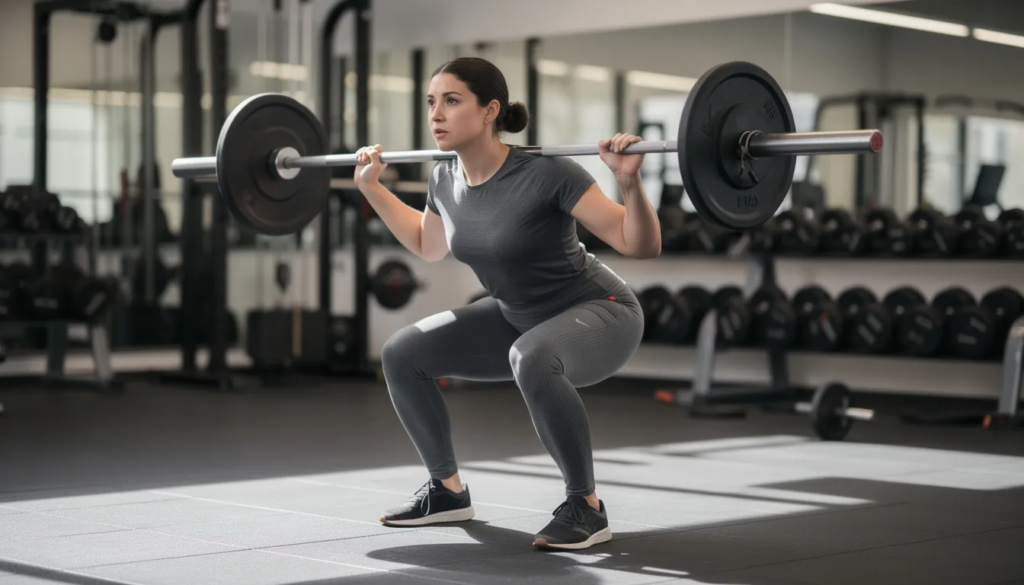
Common Knee Problems Triggered by Lifting
Knee pain with weight training can come from several structures: cartilage, ligaments, tendons, and irritated joint surfaces. The point here isn’t to give you a self-diagnosis but to help you recognize patterns.
Most gym-related knee pain falls into a few common buckets that respond well to targeted rehab and technique changes. Pay attention to where you feel pain (front, inside, outside, or deep in the joint) and which movements set it off as you read through these.
Patellofemoral Pain (“Front of the Knee” Pain)
This is the classic “around or behind the kneecap” ache. You might notice it with squats, lunges, stairs, or even sitting with your knees bent for a long time.
Patellofemoral pain is usually related to how the kneecap tracks in its groove on the thigh bone. Poor control at the hip and thigh muscle weakness often contribute, as do rapid jumps in training load.
Common lifting triggers include:
- – Deep squats with knees that can cave inward for some lifters
- – Heavy hack squats or leg press with poor alignment
- – High-rep lunges without good control
This is usually not a tear or permanent damage. It’s irritation that responds to strengthening and form tweaks. Taping, temporary depth changes, and targeted quad and hip work often help calm things down in the short term.
Patellar Tendinopathy (“Jumper’s Knee”)
Patellar tendinopathy is irritation of the tendon just below the kneecap. People often describe it as a sharp or pinpoint pain at the front of the knee, right where the tendon attaches.
This tends to show up with repeated jumping, heavy squats, box jumps, and high-volume leg extensions. The symptoms often warm up a bit once you get moving but may throb later that day or the next morning.
Management usually involves:
- – Dialing back jump volume temporarily
- – Adjusting squat load and depth
- – Using slow, controlled strengthening for the tendon (like slow decline squats or tempo work)
A calm note here: continuing to force through worsening tendon pain for weeks can stretch recovery from a few weeks into several months. Tendons respond well to load, but they need the right dose.
Meniscus Irritation or Minor Tears
The meniscus is the shock-absorbing cartilage that sits between your thigh and shin bones. It helps distribute force across the knee joint and provides stability.
Gym-related meniscus issues often happen with twisting at the bottom of a squat while the foot is planted, awkward catches on cleans, or heavy leg press with poor foot and knee alignment.
Typical symptoms include:
- – Deep joint pain that’s hard to pinpoint
- – Clicking or catching sensations
- – Pain with twisting or deep bending
- – Swelling that can show up later in the day
Not every click or MRI finding needs surgery. Many people do well with strength and movement retraining. However, true locking where your knee gets stuck and won’t fully bend or straighten is a reason to get evaluated quickly.
Ligament Sprains and Overload Patterns
The anterior cruciate ligament, posterior cruciate ligament, medial collateral ligament, and lateral collateral ligament injuries are less common from controlled lifting. But mild sprains and overload can happen with slips, twists, or attempted max lifts with poor control.
Lifters usually notice a sudden sharp pain, sometimes with a pop, followed by swelling or a feeling of instability. The knee might feel like it could give way.
Here’s how to tell the difference:
| Mild Sprain | More Serious Injury |
|---|---|
| Soreness and slight swelling | Big swelling within hours |
| Still walking OK | Difficulty bearing weight |
| Knee feels stable | Knee gives way or feels loose |
Sudden swelling, a pop, or your knee giving out repeatedly should be checked by a medical provider or physical therapist promptly. Ligament tears and significant strain need proper assessment to avoid injury progression.
Providing support through a brace can add stability to the knee during activities, but it should not replace proper training and rehab.
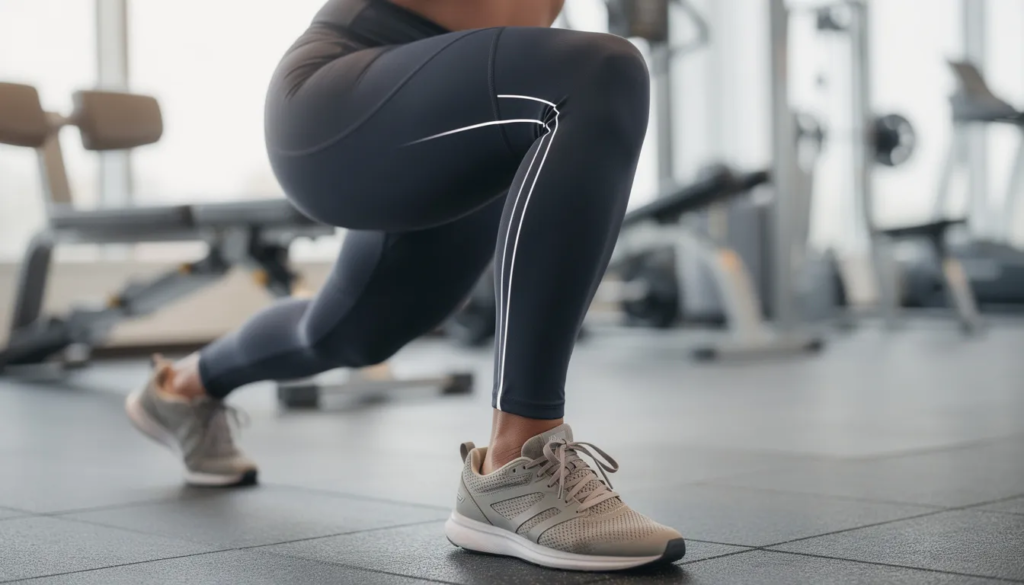
Form Checks That Commonly Fix Knee Pain Fast
Sometimes small form tweaks can make a big difference:
- – Keep your shin angle vertical or slightly forward during squats to help reduce knee stress for many lifters, though this may vary individually
- – Use a controlled tempo, taking 3–5 seconds on the descent and ascent to avoid bouncing
- – Adjust stance width to what feels stable and pain-free
- – Limit squat depth to what your knees tolerate without sharp pain
These checks often help reduce irritation quickly and improve confidence with lifting.
Why Your Knees Hurt When You Lift: Underlying Contributors
Pain usually comes from several small factors adding up rather than a single bad rep. Think of it like a bucket that slowly fills until it overflows.
Load management matters more than any single exercise. How fast you add weight, sets, and frequency determines whether your tissues can adapt or get overwhelmed. Small, steady increases tend to be safer than big jumps.
Common technique errors include:
- – Knees caving inward during squats (this can increase medial compartment stress for some lifters)
- – Heels lifting off the ground
- – Trunk collapsing forward
- – Rushing the descent or bouncing out of the bottom
- – Locking out forcefully at the top
Mobility issues like stiff ankles or tight muscles at the hips push extra stress to the knees. If your ankle can’t flex enough during a squat, your knee has to compensate.
Lifestyle contributors add up too:
- – Sitting long hours with knees bent (common in desk jobs)
- – Weak hip and core muscles from inactivity
- – Past injuries that never fully rehabbed
- – Inadequate recovery between leg days
Glute bridges, clamshells, and hip extensions improve stability for the knee joint, helping to counteract some of these mobility and strength deficits.
Once the main contributors are identified, a structured plan can usually calm the knee down and rebuild tolerance. The fix is rarely “stop lifting forever.”
What You Can Do Now at Home (And in the Gym)
Most mild-to-moderate knee pain that shows up with lifting can begin to improve with a few smart changes over two to four weeks. Here’s a practical checklist you can start this week.
Adjust Your Training
- – Reduce load by 20-40% for exercises that cause pain
- – Lower your overall volume (fewer sets, fewer sessions)
- – Temporarily avoid the exact movement that sharply spikes symptoms
- – Keep moving with exercises that feel fine
Modify Your Squats
- – Reduce depth slightly (squat to a box at a comfortable height)
- – Experiment with wider or narrower stance to find what feels best
- – Prioritize control over speed, using a slower tempo of 3–5 seconds during leg movements to maintain control and minimize knee impact
- – Track pain during and 24 hours after to see what’s working
Reverse lunges can place less stress on the patellar tendon compared to forward lunges for some lifters and can be a useful substitution when managing tendon irritation.
Add Simple Support Exercises
These help build strength around the knee without heavy load:
- Bodyweight box squats to a comfortable height (2-3 sets of 10-15)
- Glute bridges or hip thrusts to strengthen the posterior chain (3 sets of 12-15)
- Side-lying leg raises or band side steps for hip stability (2-3 sets of 15 each side)
- Calf raises for ankle stability and lower leg strength (2-3 sets of 15-20)
- Wall sits to develop isometric strength in the quads, aiding overall knee stability
Manage Symptoms Short-Term
- – Use ice after aggravating workouts to help reduce swelling and inflammation if you find it helpful, but note that responses vary among individuals
- – Keep moving on off days with light activity (walking, easy cycling, swimming, or elliptical) to maintain cardiovascular health without stressing the knees
- – Avoid sitting with knees bent for long periods
- – Stay hydrated to maintain muscle function
Pain Rule and What to Track
Aim to keep pain during and after lifting under 3 out of 10. If pain spikes above this or gets worse the next day, it’s a sign to adjust.
Track these to guide your progress:
- – Pain during exercise
- – Morning stiffness or soreness
- – Swelling or tenderness
Pain should trend down over a couple of weeks, not get steadily worse. If symptoms keep climbing despite these changes, that’s a sign to get evaluated.
To reduce knee strain, modifying exercises by using machines instead of free weights can provide more stability and control but is optional.
Wearing the right weightlifting shoes can help maintain proper form and reduce the risk of knee injuries but is also optional.
How Physical Therapy Helps Lifters With Knee Pain
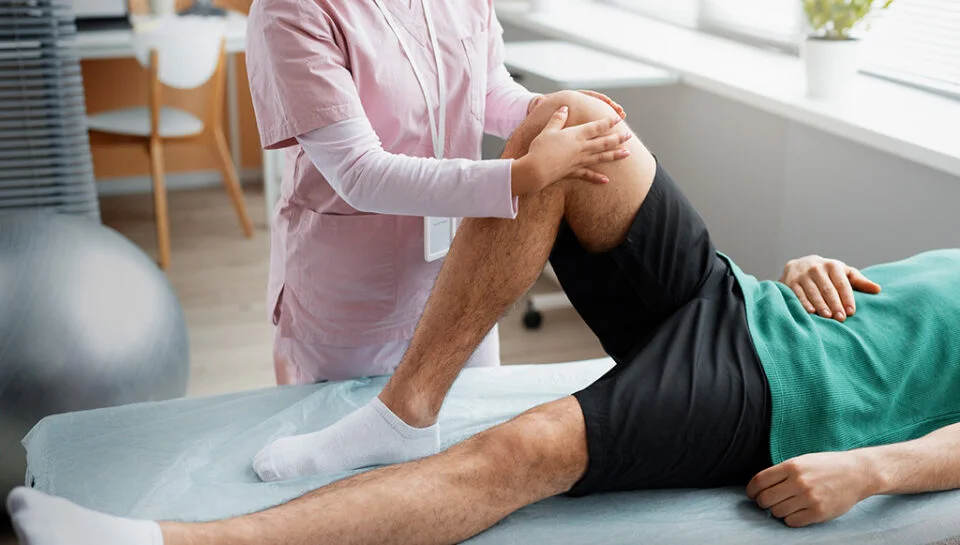
A physical therapist who understands strength training can often tell within an evaluation which movements and tissues are involved.
What an Initial Visit Looks Like
- – Detailed conversation about your training history and goals
- – Assessment of your squat, deadlift, or other relevant lifts
- – Tests of hip, knee, and ankle strength and mobility
- – Discussion of what’s aggravating symptoms and what feels fine
What Treatment Usually Includes
Treatment combines hands-on techniques for irritated tissues, specific exercises, and coaching on how to modify your training without stopping altogether.
Here are some concrete examples:
| Problem | PT Approach |
|---|---|
| Front knee pain with deep squats | Adjust squat stance or bar position, progress from box squats to full depth as symptoms ease |
| Tendon irritation | Add tempo work or isometrics, control load progression carefully |
| Weak hips contributing to knee strain | Build hip and core strength to support heavier loads |
| Muscle weakness patterns | Targeted hamstring curls, quad work, and glute exercises |
The goal is to keep you as active as possible while symptoms calm down. A good PT won’t pull you out of the gym for months. They’ll help you find the exercises you can do safely while building back to full capacity.
At Movement Solutions Physical Therapy in Greenville, sessions are one-on-one. That means there’s time to look closely at how you actually move with real lifts, not just basic tests on a table.
How Long Will It Take My Knees to Feel Better?
Most non-traumatic lifting-related knee pain improves over weeks, not years, when the plan matches the problem.
General Timelines
| Type of Issue | Typical Timeline |
|---|---|
| Mild overuse or flare-ups | 2-4 weeks with smart load changes and targeted exercises |
| Patellar tendinopathy or patellofemoral pain | 6-12 weeks of progressive strengthening and technique work |
| More involved meniscus or ligament issues | Several months with consistent rehab (highly variable) |
Pain should gradually reduce in intensity and frequency. Confidence with lifting should build over time.
One common reason symptoms linger is rushing back to previous maxes too fast. Chronic knee pain often develops when people repeatedly push through warning signs instead of adjusting.
A PT can help map out a week-by-week progression so you know when to add load, depth, or volume safely. Progress markers to watch for include:
- – Better sleep (less night discomfort)
- – Less soreness after leg day
- – Easier time with stairs
- – Ability to walk further without pain
- – Gradual return to pain levels under 3/10 during training
When You Should Get Your Knee Checked
Some situations are not ideal for a “wait and see” approach. These should be evaluated promptly:
Red flags to watch for: These are reasons to seek urgent evaluation rather than definitive diagnoses:
- – Sudden injury with a pop and immediate swelling
- – Knee giving way repeatedly or feeling unstable
- – Inability to fully straighten or bend the knee
- – Visible deformity or large swelling within a few hours
- – Fever, redness, or warmth with knee pain
These signs can indicate significant ligament tear, meniscus tear, fracture, or infection but require professional assessment to confirm. Severe pain that doesn’t calm down with rest also warrants a doctor or PT visit.
Also consider seeing a PT or sports medicine provider if:
- – Knee pain has lasted more than 2-3 weeks despite making smart changes
- – Pain keeps you from normal workouts, work, or sleep
- – Both knees get worse as you increase training even with careful form
- – You experience pain that interferes with walking or daily activities
Consulting with a doctor or physical therapist is advised for persistent knee pain to formulate a tailored treatment plan. If knee pain persists or worsens after a workout, medical evaluation is necessary.
Corticosteroid injections may be recommended for stubborn knee pain that does not respond to physical therapy. Surgery is considered a last option for knee pain when other treatments have failed or when reconstruction of damaged tissue is necessary.
Getting checked early often means a faster return to lifting with a clear plan. It’s better than stopping out of fear or making the problem worse by guessing.
FAQs About Weight Training Knee Pain
Should I Stop Squatting If My Knees Hurt?
Usually not completely. Most people can continue squatting with modifications like reducing depth, lowering weight, or adjusting stance. Track your pain during and after. If it stays under 3/10 and doesn’t get worse over 24 hours, you’re likely in a safe zone. Stop if symptoms spike or you have intense pain.
Is It Safe To Lift Weights With Knee Arthritis?
Yes, for most people. Research shows that strength training actually helps manage knee pain from osteoarthritis by supporting the joint and maintaining function. Low-to-moderate intensity work often provides the same benefits as heavy lifting with less risk. Your program might need adjustments, but the muscles around your knee still benefit from load.
Are Knee Sleeves Or Braces Worth It For Lifting?
Knee sleeves can provide warmth and a sense of support, which some lifters find helpful. However, they don’t replace proper form, good programming, or building actual strength around the joint. Think of them as a comfort tool, not a fix. If you find yourself dependent on sleeves to avoid knee joint pain, that’s a sign something else needs attention.
How Heavy Is “Too Heavy” For My Knees?
There’s no universal number. The right load depends on your training history, technique, and current tissue tolerance. Warning signs that you’re pushing too hard include pain that increases during the lift, pain that gets worse in the 24 hours after, or needing to use nonsteroidal anti inflammatory drugs regularly to get through workouts. Gradual progression with small, steady increases is safer than big jumps.
Can I Still Do Leg Day If Only Certain Exercises Hurt?
Absolutely. If squats hurt but hamstring curls feel fine, do the hamstring curls. If leg press aggravates your achy knees but step-ups don’t, focus on step-ups. Keeping the lower body strong with pain-free exercises helps you recover faster than complete rest. Avoid injury by staying within movements that don’t spike symptoms.
When Should I See A Personal Trainer Versus A Physical Therapist?
A personal trainer can help with general programming and form cues. A physical therapist is better suited for diagnosing the source of pain, addressing muscle weakness patterns, and creating a rehab plan specific to your injury. If you have persistent pain, swelling, or stiffness that’s not improving, start with a PT. You can always work with a trainer after the issue is resolved.
Ready to Lift Without Knee Pain? How Movement Solutions Physical Therapy in Greenville Can Help
At Movement Solutions Physical Therapy, we believe you don’t have to choose between protecting your knees and enjoying the training you love. Our expert team specializes in helping Greenville lifters get back to their routines confidently and pain-free with personalized, targeted care.
During your first visit, we take the time to understand your unique goals and training habits through a detailed conversation. Our hands-on movement assessment identifies the root causes of your knee pain, allowing us to create a clear, customized plan that combines effective rehab exercises with smart gym modifications.
Not sure where to begin? Schedule a one-on-one evaluation or reach out with your questions our physical therapists are here to guide you every step of the way. Many clients notice meaningful improvements in comfort and confidence within just a few weeks of following their tailored program.
At Movement Solutions Physical Therapy, getting stronger doesn’t mean hurting. Let us help you uncover what’s holding you back and build a path forward that keeps you moving and lifting with ease.
