
You go to reach into the back seat, rack a dumbbell, or throw a ball, and the back of your shoulder lights up. It might feel like a dull ache deep in the shoulder joint, or a sharper pain when you rotate. Either way, it can make it hard to do routine activities, and it gets old fast. If you’re an active adult in Greenville, SC, this infraspinatus muscle pain is a pattern we see a lot, especially in people who lift, work overhead, or play racquet and throwing sports.
What This Usually Is, and What It Is Not
A lot of infraspinatus muscle pain is irritation from repetitive motion and overload, not “something tearing every time you move.” Pain in the infraspinatus is most likely caused by repetitive motion involving the shoulder, especially reaching overhead, pressing, throwing, or lots of driving and computer posture.
That said, infraspinatus muscle pain can sometimes be confused with other problems, like a pinched nerve in the neck, shoulder impingement, or a true tendon tear. Rotator cuff tears happen, and acute trauma like falls can cause a tear. Overuse can also lead to an infraspinatus tear, partial or complete. Pain can be high even without a tear. Most people, though, do well with nonsurgical treatment when the plan fits the real driver.
The Simple Anatomy, in Plain English
The rotator cuff is a group of four muscles that help stabilize the shoulder joint. Those four rotator cuff muscles are the supraspinatus, infraspinatus, teres minor, and subscapularis. They work with the deltoid and other shoulder muscles to keep the head of the humerus seated in the socket while your arm moves.
The infraspinatus muscle sits on the back of the scapula, your shoulder blade. It is a thick triangular muscle and one of the four. Its main function is external rotation. That means it helps you externally rotate the arm, and it helps stabilize the shoulder during motion, especially as the arm moves upward. It is also heavily involved in dynamic stabilization.
In real life, that means it helps prevent the shoulder from feeling sloppy or unstable when you reach, lift, throw, or carry.
What Infraspinatus Muscle Pain Can Feel Like
Infraspinatus muscle pain often shows up as a dull ache in the back of the shoulder, or a sharper pain during rotation. Symptoms of infraspinatus muscle pain can include pain while sleeping, pain with reaching overhead, and weakness in the affected arm. It can also create referred pain.
Infraspinatus muscle pain can spread down the arm past the elbow and into the forearm, sometimes even toward the hand. That can make people worry it is a nerve issue, and sometimes it is, but not always. If you have numbness, tingling, or grip changes, we also screen the neck and nerves.
Here’s a quick symptom pattern to help distinguish common sources of shoulder pain:
- Infraspinatus muscle pain is usually felt in the back of the shoulder, worsens with external rotation, and often hurts when reaching behind.
- Deltoid or biceps tendon pain tends to be felt in the front or lateral shoulder.
- Neck-related pain often includes numbness, tingling, or other nerve-driven changes.
Sleeping can hurt because prolonged compression or stretch of the shoulder tissues happens overnight, combined with less movement to relieve pressure.

Common Causes and Contributors We See a Lot
The most common cause of infraspinatus muscle pain is overload. You do more volume, more intensity, or more new movements than the tissue is ready for. Overhead sports and training are frequent culprits. Tennis players, swimmers, and throwing athletes load the rotator cuff muscles constantly, and the infraspinatus tendon can get irritated over time.
Poor posture can contribute too. Chronic slumped posture can put the shoulder blade in a position that creates ongoing tension on the infraspinatus and other muscles. Shoulder impingement is another factor. Some positions narrow space in the shoulder and can irritate sensitive tissues with repeated overhead work.
It is not always the only cause, but it is a common contributor. Finally, recent injuries matter. A fall, a sudden yank, or a heavy missed rep can create an acute injury and change the way the shoulder stabilizes.
Load errors and technique patterns can increase stress on the infraspinatus, causing infraspinatus muscle pain. Many people unknowingly push through pain or fatigue, which compounds irritation and delays healing.
A Quick Self-Check. Irritation, Tendon Issue, or Something Else
Think of it this way. This is just a general guide, not a diagnosis. If your strength is clearly dropping, or you’re not sure what’s going on, it’s worth getting checked in person.
If the pain shows up mostly with heavier loads or repeated external rotation, and it settles when you back off and adjust your training, it’s often a sign of tendon or muscle irritation.
If you notice a sudden drop in strength, a clear loss of range of motion, or pain that keeps getting worse through a movement, that’s a signal to take a closer look.
If symptoms start showing up in the other arm, or you feel neck pain, tingling, or numbness, there could be some nerve involvement. The shoulder and neck can overlap more than people expect.
At the end of the day, your history, any recent injuries, and what movements make things better or worse matter more than anything else.
What to Do Now at Home
Resting the shoulder is often recommended because it gives the irritated tissue a chance to settle. Rest does not mean doing nothing for two weeks. It means modify what flares it up, especially reaching overhead, heavy pressing, and high-rep throwing.
Step 1. Set the Rules for the Next 7 to 10 Days
Keep pain in a mild, manageable range during activity. If you are worse for more than 24 hours after a session, that was too much load. Adjust the next workout. Avoid the “push through” test right now. You are trying to calm the system, then rebuild.
Step 2. Use Simple Pain Relief Tools
Ice can help calm pain and sensitivity after activity. Try 10 to 15 minutes after aggravating activity. Heat can help relax the shoulder muscles before mobility work. Use a warm shower or heating pad for 5 to 10 minutes, then move.
If self-massage helps, use a lacrosse ball or tennis ball on the back of the shoulder blade area. Go slow. Find a tender spot, breathe, and relax. You are not trying to bruise the body.
Step 3. Restore Range of Motion with Low Stress
Do pendulum swings for 30 to 60 seconds each direction, one to two rounds. Cue: relax the shoulder and keep the motion gentle. Guardrail: never force end range.
Add a cross-body stretch if it feels good. Cue: keep the stretch gentle and relaxed. Guardrail: do not force end range or push through pain.
Step 4. Start Rotator Cuff Exercises with Control
Focus on shoulder stability, not on pushing to fatigue.
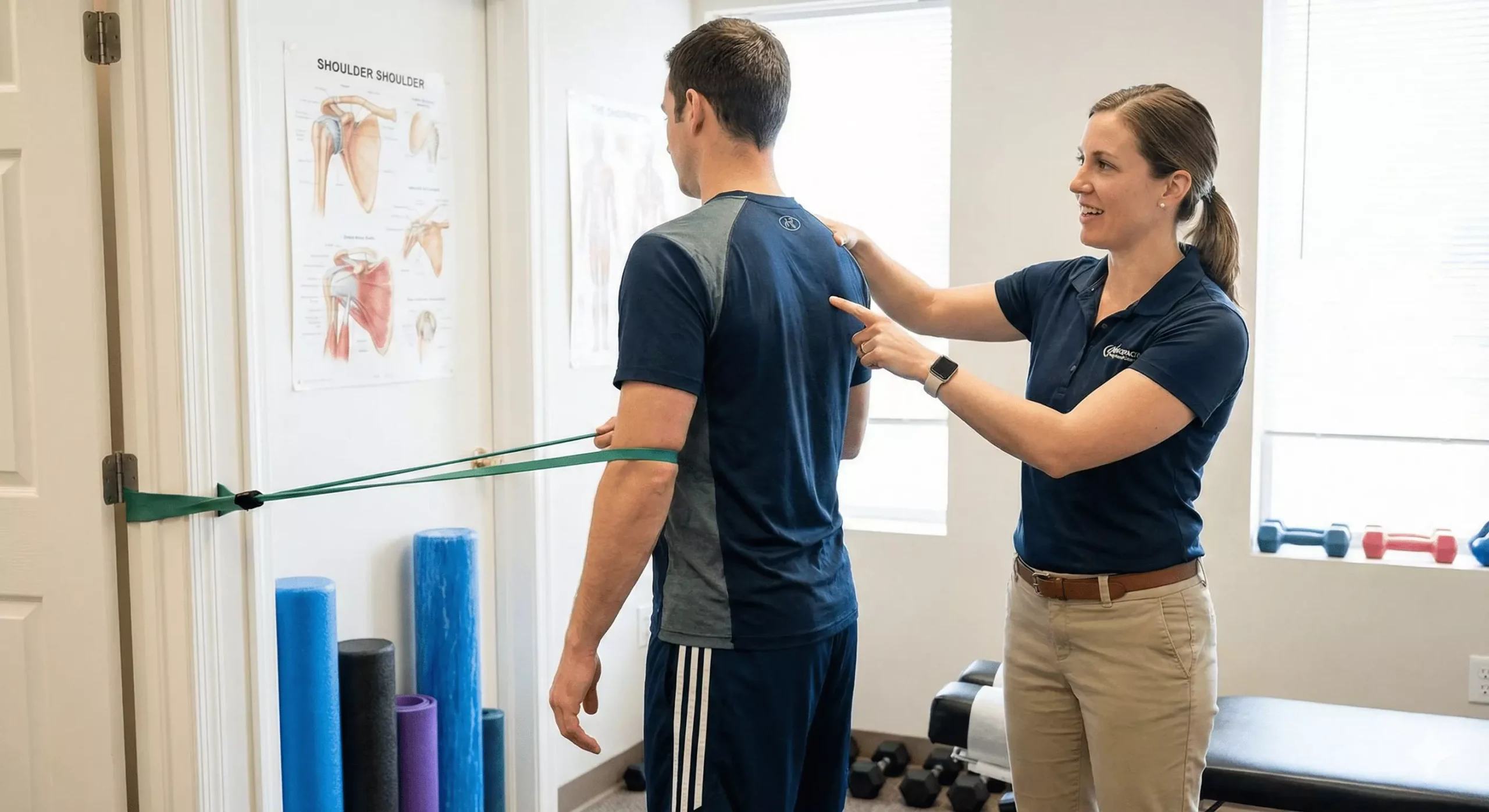
Band External Rotation: Start with elbow at your side, towel roll between elbow and body. Cue: set your scapula, keep your elbow tucked, and ribs quiet. Guardrail: no sharp pinch or lingering flare-up lasting more than 24 hours. Slowly externally rotate, then return with control. Two to three sets of 10 to 15.
Face Pulls: Use a light band or cable, pull toward face level. Cue: pull with your upper back, not your neck. Guardrail: keep the range where your shoulder feels smooth and pain-free. Two sets of 8 to 12.
Return to Overhead Progression
Once pain is controlled and strength improves, begin light, pain-free overhead movements like wall slides or assisted raises. Gradually increase load and range over days to weeks, avoiding pain or fatigue spikes.
When You Should See a Pro Sooner
Most cases of infraspinatus muscle pain are manageable, but some situations deserve quicker help. Get checked sooner if you notice:
- new numbness or weakness
- symptoms worsening fast
- major swelling or heat
- fever or unexplained weight loss
- bowel or bladder changes
Also, if pain is persistent or severe, or you cannot use the affected arm for daily activities, a physical exam is the right next step.
What Physical Therapy Does for Infraspinatus Muscle Pain

In clinic, we start by figuring out why the shoulder is irritated, not just where it hurts. We look at your range of motion, strength, and how the shoulder blade and humerus move together. We also screen the neck when symptoms look like referred pain or a nerve component.
A good plan usually includes:
- Settling irritation first so movement is less guarded.
- Strengthening the rotator cuff and other rotator cuff muscles, plus the bigger shoulder and trunk muscles that support them.
- Coaching mechanics for lifting, reaching overhead, and sport movements.
- Building durability so the problem does not keep coming back.
Hands-on work can help when pain is high or movement is stiff. That might include soft tissue work around trigger points, joint work at the shoulder joint, or other techniques based on what we find.
If imaging is needed, we will tell you. Infraspinatus muscle pain and injuries are often diagnosed through medical history, physical examination, and sometimes imaging like X-rays or MRI when the picture is unclear.
If you are in Greenville, SC and you want a clear plan instead of guessing, that is exactly what a focused PT assessment is for. Keep training the body while you calm the shoulder.
What to Expect and How Long It Usually Takes
Nonsurgical treatments are usually effective for most people with infraspinatus muscle pain, especially when the load plan is realistic. If it is mainly tendinopathy or myofascial pain syndrome with trigger points, many people notice early wins in sleep comfort and day-to-day pain within a few weeks. Strength and tolerance take longer. The tendon and the system adapt to loading over time.
Early improvements include less sharp pain and better sleep quality. Later gains come with improved strength, endurance, and the ability to return to overhead activities without flare.
If there is an infraspinatus tear, recovery varies a lot. It can take 2 to 12 months depending on severity, your goals, and whether surgery is needed. Surgery is not the default. It is usually reserved for severe tears, major loss of function, or when nonsurgical treatment fails.
A helpful way to track progress is simple. Better sleep. Less pain with reaching overhead. More strength in external rotation. Less “hot spot” pain in the back of the shoulder. If you are in Greenville, SC, we can help you with a step-by-step plan to get back to your activities safely.
Frequently Asked Questions
Can Infraspinatus Muscle Pain Cause Arm Pain Past the Elbow?
Yes. Referred pain from the infraspinatus can travel down the arm past the elbow, and sometimes toward the forearm. That does not automatically mean a pinched nerve, but if you also have numbness, tingling, or neck pain, get it checked.
Is the Infraspinatus the Same Thing as the Rotator Cuff?
The infraspinatus is one of the four rotator cuff muscles. The rotator cuff is the whole group. When one gets irritated, the whole system often changes, including the other muscles that help stabilize.
Why Does It Hurt More at Night?
Sleeping positions can put the shoulder in a compressed or stretched position for hours. A simple change, like hugging a pillow to keep the shoulder supported, can relieve pain and reduce overnight irritation.
How Do I Know If It Is a Tear?
Rotator cuff tears often come with clear weakness, pain that does not settle with rest, and difficulty lifting the arm. But symptoms overlap. Pain can be high even without a tear. A physical exam is the best way to sort out irritation, tendinopathy, and tear.
Are Trigger Points a Real Thing in This Muscle?
They can be. Myofascial trigger points in the infraspinatus can create shoulder pain and referred pain patterns that feel confusing. Active trigger points can hurt even when you are not touching the area. They also tend to flare when the muscle is overloaded or stressed.
Should I Stop Lifting Completely?
Usually no. Most people do better with smart modification. Keep training the body. Adjust the shoulder loading. Pick movements that do not spike symptoms, then build back up with control.
Why Does Driving or Desk Work Flare This Up?
Driving and desk work involve prolonged forward shoulder posture and repeated small movements. This puts constant tension on the infraspinatus and other rotator cuff muscles, leading to irritation. Taking frequent breaks to reset posture, stretch, and move your shoulders can help reduce flare-ups.
If you’re in Greenville, SC, and need guidance managing infraspinatus muscle pain, our team can help you develop a personalized plan.
Medically reviewed by Dr. Tim Varghese, PT, DPT · Last updated August 28, 2026

Dr. Tim Varghese, PT, DPT
Dr. Tim Varghese, PT, DPT, is the founder of Movement Solutions Physical Therapy in Greenville, SC. He earned his Doctor of Physical Therapy from the Medical College of Georgia and is a Board-Certified Orthopedic Clinical…
More about Dr. Tim →