
When Squat Day Makes Your Thighs Scream
Understanding why your thighs hurt after squats is crucial for anyone serious about fitness. Whether you’re a seasoned gym-goer or just starting your training plan, knowing when soreness is normal and when it signals a problem can make all the difference. In Greenville, many people experience thigh pain after squats and wonder if it’s just part of getting stronger or something to be concerned about.
This article breaks down the key signs to help you distinguish between typical muscle soreness and potential injuries. You’ll learn practical tips to manage discomfort, improve your squat technique, and ultimately keep progressing without unnecessary pain holding you back.
Normal Thigh Soreness vs Injury Pain
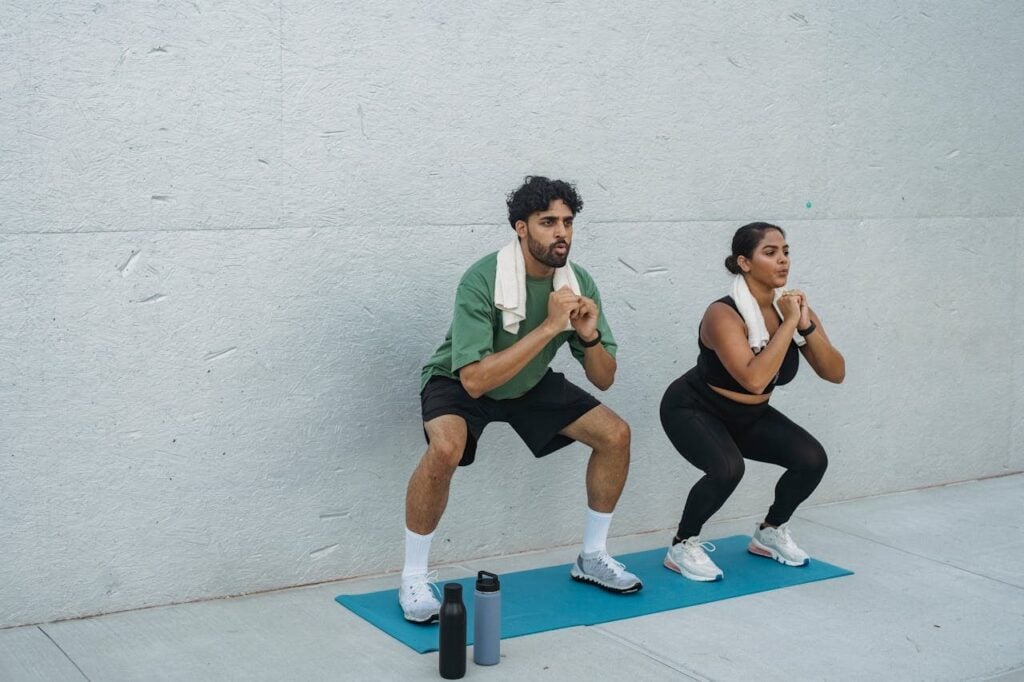
Normal post-squat soreness usually shows up in both thighs. It feels like a dull, achy stiffness that gets worse when you go down stairs or try to sit in a low chair. This type of soreness typically starts about 12 to 24 hours after your workout and peaks somewhere around 48 to 72 hours. This is called delayed onset muscle soreness, or DOMS for short. It is your body responding to the work you asked it to do.
Injury-type pain feels different. It is often sharp, located in one specific spot, and may have started during the squat itself. Maybe you felt a twinge or a grab in the middle of a rep that made you stop the set. Or the pain got worse with each rep instead of staying steady. That pattern is more concerning than general achiness the next day.
A few green light signs that you are likely dealing with safe soreness. The discomfort is improving each day. You are not limping. You can still do daily tasks like walking, sitting, and climbing stairs, even if they are uncomfortable. And both thighs feel about the same.
Yellow or red light signs that it may be more than soreness. You cannot put full weight on one leg. There is visible swelling around the thigh or knee. The pain wakes you up at night and does not settle with rest. Or you noticed bruising appear without hitting anything.
See a professional sooner if you have new numbness or weakness in the leg, the thigh is very hot or swollen, you have a fever or unexplained weight loss, or you notice any bowel or bladder changes. These are not common, but they are worth knowing.
If you are experiencing persistent leg pain while performing squats or other activities, it is crucial to address it early to reduce leg pain and avoid further injury. Sometimes, weak muscles around the hips and chest can contribute to improper squat mechanics, making the pain worse. Strengthening these areas and correcting your form can help you rid yourself of discomfort and squat safely again.
Other Possible Causes of Thigh Pain After Squats
While local muscle soreness is common, other issues can cause thigh pain after squats and should not be overlooked:
Hip flexor or adductor tendinopathy: Pain located in the high front groin or inner thigh area, often reproducible at a certain squat depth.
Referred pain from the low back: Thigh discomfort accompanied by back symptoms, tingling, or pain radiating below the knee.
Knee-driven quad tendon irritation: Pain just above the kneecap that worsens with stairs or repeated squat sessions.
Including these possibilities improves understanding and trust by acknowledging that thigh pain is not always simple muscle soreness.
Important Gym-Related Red Flags: Rhabdomyolysis Warning
Though rare, it’s important to be aware of rhabdomyolysis, a serious condition that can occur after very intense or new squat sessions. Warning signs include:
Severe swelling and tightness in the thighs
Pain that feels out of proportion to the workout
Weakness in the legs
If you notice these symptoms, seek medical attention immediately.
What Is Actually Working During Squats?
When you squat, your thighs do most of the heavy lifting. The quadriceps, those four muscles on the front of your thigh, work hard to straighten your knee as you stand up from the bottom of the squat. This is why the front of the thighs often feels the brunt of the soreness. The quads include the rectus femoris, vastus lateralis, vastus medialis, and vastus intermedius. You do not need to memorize those names. Just know that the front of your thigh is working overtime during most squat variations.
On the back of your thigh, the hamstrings help control the descent and stabilize your hips. The adductors on the inside of your thigh help keep your knees from caving in. And the glutes up at your hips share the load, especially as you push up from the bottom. All of these muscles work together to move weight through a full squat.
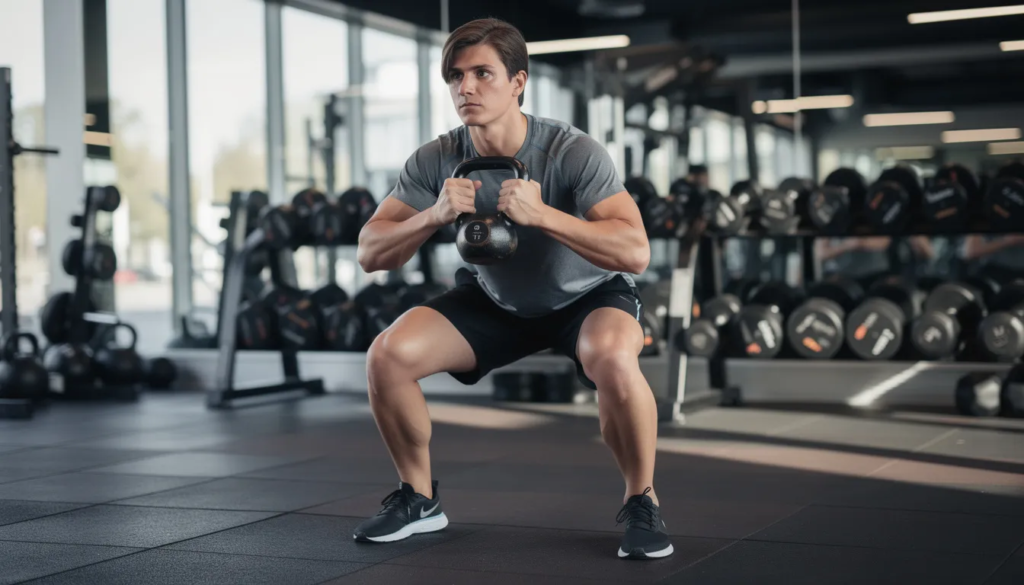
Whether you are doing barbell back squats, goblet squats, or bodyweight squats, the quads get loaded heavily. When you squat deeper, change your tempo, or add more weight, you are asking these muscles to do more than they are used to. That is when soreness shows up. It is usually not a sign of damage. It is a sign that your muscles are adapting to a new demand.
The joint positions matter too. When your knees bend deeply and your hips are flexed with your torso angled forward, different parts of the thigh take more or less load. A more upright squat style tends to stress the quads and front of the knee more. A more hip-dominant style shares the work with the glutes and hamstrings.
Main Reasons Your Thighs Hurt After Squats
There is usually more than one factor at play when your thighs hurt after squats. Training load, technique, recovery habits, and sometimes old nagging issues can all contribute. Here are the most common reasons we see in the clinic.
Reason 1: Normal Muscle Soreness and DOMS
Delayed onset muscle soreness is the classic post-squat experience. It shows up the day after your workout, peaks around 48 hours, and usually fades by day three or four. This is your body repairing the microscopic stress you put on the muscle fibers. Blood flow increases to the area, nutrients get delivered, and the muscles come back a little stronger.
Changing squat variations often triggers DOMS. If you just added Bulgarian split squats, went deeper than usual, or threw in extra sets, your quads are doing more work than they are accustomed to. The soreness you feel is a normal response.
This type of soreness usually improves with gentle movement and light activity. Complete bed rest often makes it feel worse. If both thighs are sore without any sharp pain, you are most likely dealing with standard DOMS.
Reason 2: Too Much Pain From Load and Volume Errors
Active adults in Greenville often get into trouble when they blend heavy gym sessions with running, cycling, or pickup basketball without planning recovery time. Your legs hurt from the combined stress. Your legs do not know the difference between squat volume and trail miles. It all adds up.
Big jumps in training volume can make your thighs so sore that stairs and sitting on the toilet become painful for several days. Many lifters use a small weekly increase of about five to ten percent as a rule of thumb, but the right jump depends on your training age and recovery. Your muscles need time to adapt and heal.
Reason 3: Technique Issues That Overload the Quads and Knees
Certain squat form patterns put extra stress on the front of the thighs and knees. When weight shifts forward onto your toes, when knees collapse inward, or when you stay very upright with little hip movement, the quads and knee joint can take more load than necessary.
Letting your knees go forward is not automatically bad. In fact, some knee travel is normal and healthy. The issue comes when all your weight ends up on your toes and your heels lift off the ground. That tips the balance toward excessive quad and knee stress.
A few simple cues can help. Feel your weight in your mid-foot and heel, not just your toes. Let your hips travel back slightly as you descend. Keep your knees tracking in line with your toes, not caving inward. Many people find it helpful to film their squats on a phone or get coaching from a personal trainer to see these patterns clearly. Improper form is fixable once you know what to look for.
Reason 4: Underlying Irritated Tissues (Tendon, Joint, or Muscle Strain)
A muscle strain feels different than soreness. It is usually a sharp, local pain at one specific spot in the thigh or front knee. You might feel a grab or a twinge during a rep rather than a general ache afterward. Strains can range from mild, where you can still walk and train with modifications, to more severe, where movement is significantly limited.
Tendon irritation around the knee or front of the hip can also flare up with squats, especially at deep ranges or with heavy loads. These issues tend to hurt on specific reps or at certain depths. They often linger past the usual 72-hour soreness window.
If you keep feeling the same sharp thigh or knee pain every time you squat, that is worth getting assessed. Pushing through it without a plan can turn a minor issue into a longer problem.
Reason 5: Recovery Habits, Sleep, and Stress
Training is only half the story. Your body repairs muscle fibers while you sleep and needs adequate protein and hydration to do it well. Poor sleep, high work or family stress, and low protein intake can all slow recovery and make soreness feel more intense.
Busy adults in Greenville often squat hard in the morning, then sit at a desk or in a car for hours. That combination can make thigh soreness feel worse and more stiff. The muscles tighten up when you do not move.
Paying attention to sleep, hydration, and nutrition is not fancy advice. It is fundamental. If you are training hard but neglecting recovery, your thighs will let you know. If you are under-hydrated, soreness can feel worse and performance often drops.
What You Can Start Doing at Home This Week
Most people can start calming down thigh soreness without stopping all squats forever. The goal is to reduce irritation while keeping blood moving and technique improving. Here is a practical approach for the first three to seven days.
Step 1: Adjust, Don’t Just Quit Squats
Instead of eliminating all lower-body work, temporarily reduce load, sets, or depth. This keeps you moving and maintaining your technique while giving your thighs a chance to calm down.
Try reducing your working weight by 20 to 30 percent for a week. Cut your sets in half. Or swap barbell back squats for goblet squats or box squats, which can be easier to control. The point is not to avoid the movement pattern. The point is to find a dose that your thighs can handle right now.
Quitting squats entirely often backfires. You lose the movement quality you have been building, and the soreness can come back even stronger when you return to training.
Step 2: Use Gentle Movement to Ease Soreness
Light walking, easy cycling, or simple bodyweight sit-to-stands can help ease DOMS in the thighs. Movement increases blood flow to sore muscles and can reduce that stiff, tight feeling.
Aim for 10 to 15 minutes of light movement once or twice a day while soreness is at its peak. This does not need to be a workout. A walk around the neighborhood or an easy spin on a stationary bike is enough.
Complete rest often makes thighs feel more stiff and uncomfortable the next day. Gentle movement speeds up the recovery process.
Step 3: Simple Thigh Stretches and Self-Massage
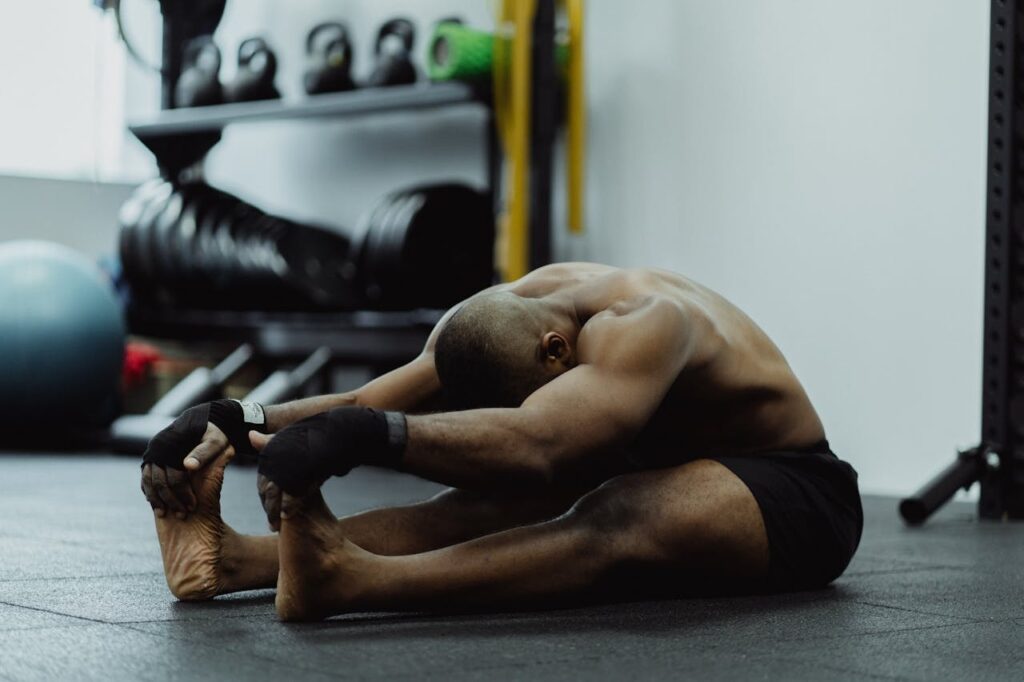
A couple of basic quad stretches can help with tightness. Try a standing quad stretch where you hold your ankle behind you while bracing on a counter for balance. Or try a half-kneeling hip flexor and quad stretch, holding for about 20 to 30 seconds on each side.
Foam rolling the front and outer thigh for one to two minutes can also reduce tightness. Roll slowly and pause on tender spots, but do not dig aggressively into areas that cause sharp pain. The goal is gentle pressure and mild relief, not a painful experience.
Self-massage with a foam roller or even your hands can help break up some of the stiffness, especially in the outer quad near the IT band area. Keep it light enough that you can breathe normally throughout.
Step 4: Support Recovery with Sleep, Hydration, and Protein
Sleep is when your body does its best repair work. Aim for consistent sleep routines, ideally seven to eight hours. Lack of sleep can make soreness feel worse and linger longer.
Stay hydrated throughout the day, especially on training days. Dehydration reduces muscle elasticity and can contribute to that tight, sore feeling.
Get a source of protein with your meals, particularly around training days, to support muscle repair. This does not need to be complicated. Chicken, fish, beans, Greek yogurt, eggs, or a simple protein shake all work. The key is consistency, not perfection.
Step 5: When to Press Pause and Get Checked Out
Stop pushing squats at home if you notice sudden sharp thigh pain during a lift, visible swelling, bruising in the thigh that appeared without hitting anything, or a feeling like the leg might give way.
If your thighs still hurt as much or more after five to seven days of scaled-back activity, it is worth getting a professional exam. Early help usually leads to a smoother return to lifting than waiting until the problem gets worse.
There is no prize for pushing through pain that is not improving. Getting checked out early often means fewer missed workouts in the long run.
How Physical Therapy Helps When Thighs Hurt After Squats
Physical therapy is not just for post-surgery recovery. It is for active adults who want to keep lifting safely and figure out what is actually causing their pain. In Greenville, we see plenty of lifters, runners, and weekend warriors who just want to get back to training without guessing.
Step 1: A Detailed Movement and Strength Assessment
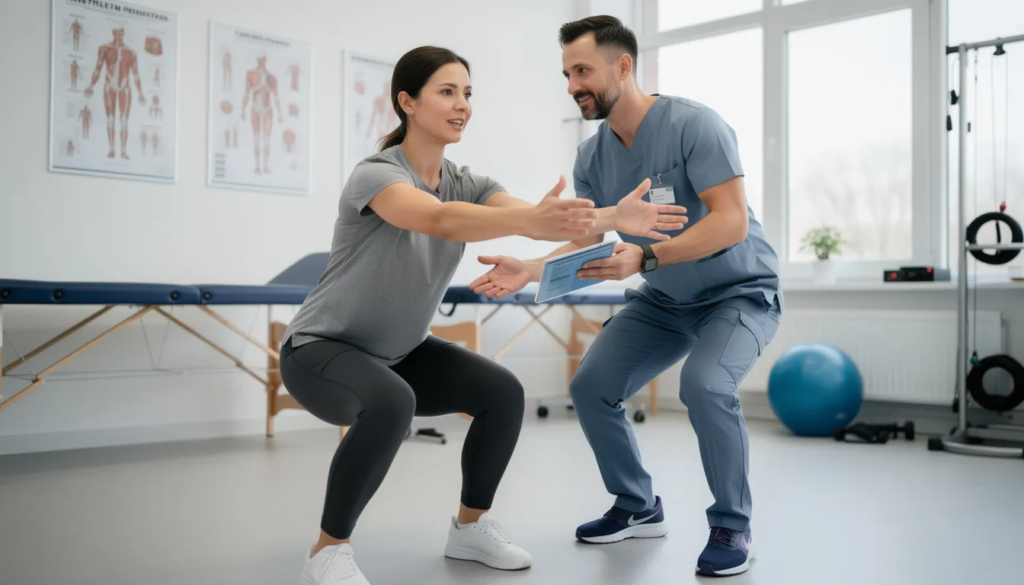
A PT will watch how you actually squat, not just test isolated muscles. We look at different squat variations, test hip and knee strength, check ankle and hip mobility, and observe how your pelvis and trunk move under load.
We also review your actual training program. How often are you squatting? What other leg work are you doing? How has your volume changed recently? This context matters because thigh pain rarely exists in isolation from your training history.
The goal is to find the specific driver of your pain, not to tell you to stop squatting forever. Most people can keep training in some form while we work on the issue.
Step 2: A Plan Tailored to Your Squat and Your Life
We build a plan around your goals. Whether you are training for a powerlifting meet, doing CrossFit, running trails, or just want pain-free stairs, the approach is different.
Loads, depth, stance width, and frequency can all be modified to calm symptoms while maintaining your progress. We might temporarily swap a back squat for a goblet squat, reduce depth, or change your stance to hip width instead of wider.
Practical homework is key. You will get three to five exercises that actually matter, matched to what you can realistically do during a busy week in Greenville. Not a huge list that you will never complete.
Step 3: Targeted Strength Work and Mobility
Exercises might include step-downs, split squats, Romanian deadlifts, hip abduction work, tempo squats, and controlled pause squats. These build the strength and control you need for a good squat without overloading irritated tissues.
Mobility work might include hip flexor and quad stretches, adductor mobility drills, and ankle range-of-motion exercises if those are limited. Ankle dorsiflexion is often overlooked but can significantly affect how your thighs load during squats.
The purpose is not just to stretch what is tight. It is to build control through the ranges used in squats so your muscles can handle the demands you are putting on them.
Step 4: Hands-On Care When It Helps
Some people benefit from hands-on treatment like soft tissue work to the quads, hip flexors, or adductors. Joint mobilizations can also help when stiffness is a factor limiting your squat depth or comfort.
Hands-on care can calm symptoms and open up movement so that exercises feel better and are more effective. It is a tool that works well combined with active rehab and coaching.
Manual therapy is not a magic fix on its own. It is one piece of a plan that includes exercise, load management, and movement coaching. But when it helps, it can speed up the process noticeably.
What Progress Usually Looks Like and How Long It Takes
Everyone wants to know how long until they can squat heavy again. The honest answer is that it depends on what is causing the pain. But here are some realistic ranges for common scenarios.
Timeline for Normal Soreness or Mild Overload
Typical thigh soreness from a hard squat session in a healthy lifter often improves within three to four days. The peak is usually around 48 hours, then things start getting better.
With better warm-ups, gradual loading, and solid recovery habits, most people can train regularly with only mild, manageable soreness. The repeated bout effect means your muscles adapt over time. The same workout that left you hobbling this week might only cause light soreness in a few weeks.
Timeline for Irritated Tendons or Mild Strains
Minor quad or adductor strains and early tendon irritation may take several weeks to calm, especially if you keep aggravating them with heavy squats. These issues need a more structured approach.
A reasonable range is four to eight weeks for meaningful changes when following a structured plan. You can usually still train around the issue during this time, just with modifications. Progress is judged by improved function and tolerance, not just by being completely pain-free in every situation.
How to Tell You Are on the Right Track
A few concrete signs of improvement. Less soreness after similar workouts. Easier stairs. Able to add a little more range or load without a flare. These are the markers that matter.
Keeping a simple log of your squat sessions, pain levels, and notes about how your thighs feel the next day can help you see patterns and progress. It does not need to be complicated. Just a few notes in your notes app after each session.
Patience and adjustments work better than all-or-nothing thinking. You do not have to either squat heavy or avoid squats entirely. Finding the right dose for where you are now is the goal.
FAQs About Thigh Pain After Squats
These are common questions people in the clinic ask about sore thighs and squats.
Is It Normal For The Front Of My Thighs To Burn After Squats?
Yes, front-thigh soreness is very common because the quadriceps do a lot of the work in most squat variations. The quads are responsible for straightening your knee against resistance, which is a major part of standing up from the bottom of a squat.
There is a difference between burning fatigue during a set and sharp, stabbing pain that stops the movement. The burn you feel during your last few reps is normal muscle fatigue. Sharp pain that makes you stop mid-rep or changes how you move is not normal and should be checked out.
How Long Should My Thighs Hurt After Squats?
Typical post-workout soreness lasts about 24 to 72 hours, sometimes a bit longer after a major change in training like a new exercise, more volume, or deeper squats. This is the normal DOMS timeline.
If pain stays intense, does not improve at all over several days, or keeps getting worse, it is time to adjust your training and possibly get assessed. Excessive pain that makes walking very difficult is not normal DOMS and should be checked.
Should I Squat Again If My Thighs Are Still Sore?
Mild soreness is usually fine to train through if it is easing and does not change your squat form. Many lifters squat two or three times per week and experience some level of ongoing soreness. That is normal.
Choose lighter weights, fewer sets, or different exercises when soreness is higher. Avoid heavy max attempts on very sore thighs, especially if your form starts to break down. The goal is to keep moving without digging a deeper hole.
Why Do My Thighs Hurt But Not My Glutes After Squats?
Many common squat styles load the quads more than the glutes, especially with a narrow stance and upright torso. The quads do most of the work extending the knee, while the glutes contribute more at the hip.
Adjusting stance width, squat depth, and adding glute-focused work like hip thrusts or bridges can help share the load. Not feeling glute soreness does not always mean they are not working. Soreness is not a perfect indicator of muscle activation.
Is Thigh Pain After Squats More Dangerous As I Get Older?
Squats can be safe and very beneficial in your 40s, 50s, and beyond when dosed and coached well. The movement pattern of squatting is fundamental to daily life. Getting out of a chair, climbing stairs, and picking things up all involve squat mechanics.
Recovery may take a little longer as you age, so load and frequency sometimes need to be adjusted. But the basic principles stay the same. Focus on form, gradual progress, and consistent strength work instead of avoiding squats completely. Most people can squat safely for decades with the right approach.
When Should I See A Physical Therapist About Thigh Pain From Squats?
Consider seeing a PT if pain keeps coming back in the same spot, if pain changes your squat form, or if pain limits normal walking, stairs, or sleep. These patterns suggest something beyond standard soreness.
Red flags that need prompt attention include new numbness or weakness, major swelling or heat, fever, unexplained weight loss, or bowel or bladder changes. These are uncommon but important to recognize.
Getting help early in Greenville can often mean fewer missed workouts and a quicker return to the training you enjoy. Waiting until the problem is severe usually makes the process longer.
Ready to Squat Without Fear of Your Thighs Blowing Up?
Most thigh pain after squats can be understood and improved with the right plan. You don’t have to keep guessing or pushing through hoping it gets better on its own.
At Movement Solutions Physical Therapy in Greenville, SC, we’re here to help you identify the root cause of your thigh pain and develop a personalized plan to get you moving pain-free again. Whether you prefer an in-person visit or a virtual evaluation, our expert therapists will provide a clear assessment tailored to your training goals.
Not quite ready to book? No problem give us a call or send us your questions anytime. Our mission is to help you squat better, with less pain, so you can keep lifting, hiking, running, and enjoying the activities you love. Let’s work together to unlock your full potential in the gym and beyond.
