
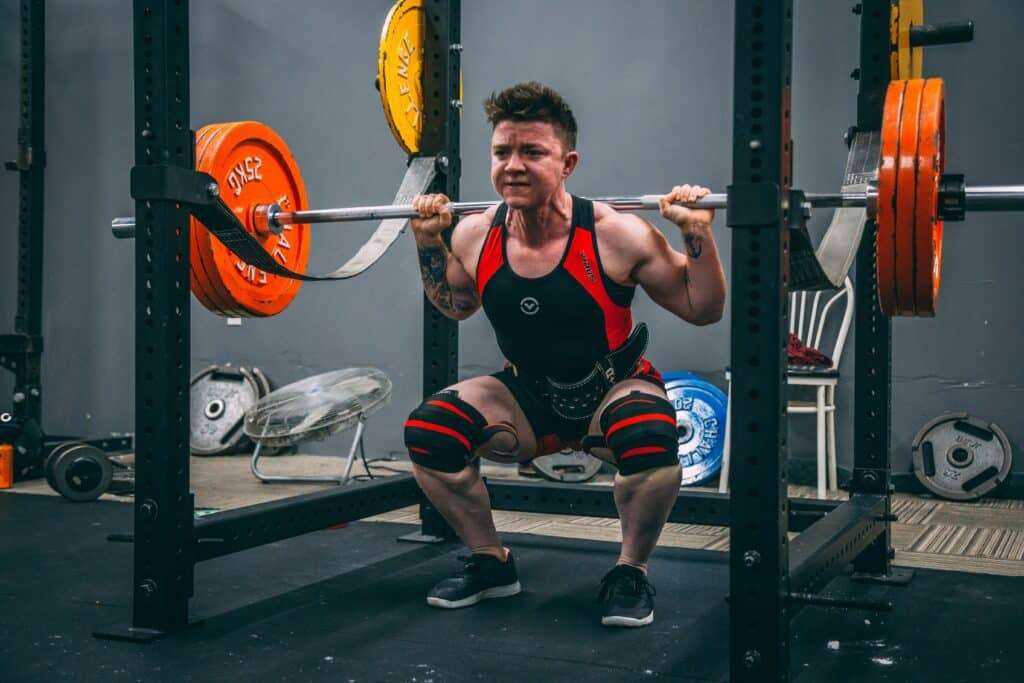
Lower back pain when squatting is one of the most common complaints we hear from active adults who lift. The good news: it’s usually mechanical —driven by how you’re loading and moving —not a sign of serious damage, which means it’s very fixable. Below are the real causes of lower back pain when squatting, the symptoms to watch for, and how to treat and prevent it.
Table of Contents
ToggleWhy Your Lower Back Hurts When You Squat
There are two main drivers behind lower back pain when squatting with weights. The first is a strength deficit—a lack of the prerequisite trunk, hip, and thigh strength to support the load. The second is technique, like leaning or slumping, which shifts stress off your legs and onto your spine. Often it’s a mix of both: you’re lifting more than your muscles can handle, so your form breaks down and your back pays for it.
What the symptoms feel like: most people notice a dull ache or tightness across the low back during or right after squatting. A deep muscular soreness that eases within a day or two usually points to a muscle strain. Sharp, shooting, or radiating pain, especially down a leg, or pain that lingers is a signal to stop and get assessed rather than push through.
Common Causes of Lower Back Pain When Squatting
Lower back pain when squatting can stem from several overlapping factors. Understanding which ones apply to you is the first step to fixing it for good.
Poor Squat Technique
Improper form is the number-one culprit. Rounding your back, leaning too far forward, or failing to brace your core all place unnecessary stress on the lumbar spine. To squat well, stand with your feet slightly wider than shoulder-width, bend at your hips and knees as deep as you can comfortably go, and keep your chest lifted and shoulders pulled down. Taking a deep breath and bracing before you descend helps prime the trunk and protect the low back.
A Weak Core
Your core—the abdominals, obliques, and deep spinal muscles—stabilizes and protects your spine under load. When it’s weak, your lower back is forced to compensate, and pain follows. Core-stability training measurably reduces low back pain by improving how those muscles support the spine, which is why building real trunk strength beats endlessly stretching a sore back.
Limited Ankle and Hip Mobility
When your ankles are stiff, or your hips lack mobility, you’re forced to lean forward or round your back to reach depth, dumping the load onto your spine. Improving mobility below and above the pelvis lets you keep a stronger, more upright squat position.
Too Much Weight, Too Soon
Muscle strains happen when the load exceeds your capacity. If you’re lifting heavier than your strength allows, your form gives way and your back absorbs the difference. Progress the weight gradually while your technique holds, and back off when it doesn’t.
Poor Recovery: Sleep, Stress, and Nutrition
Your muscular capacity drops when you’re sleeping poorly, highly stressed, or eating a nutrient-poor diet, all of which make a strain more likely. Avoiding movement out of fear also backfires, since motion improves muscle function and blood flow. Aim for around eight hours of sleep, a diet low in sugar and refined carbs, and a real plan to manage stress.
How to Prevent Lower Back Pain When Squatting
To keep lower back pain when squatting from coming back, build these habits:
- Bend at your hips, knees, and ankles together.
- Wear lifting shoes if you have stiff ankles.
- Drive up through your hips.
- Lift with control—no bouncing out of the bottom.
- Don’t sacrifice technique for heavier weight.
- Rest at least a minute between heavy sets.
- Warm up before you squat.
- Drink plenty of water.
- Get enough sleep.
Dialing in your squat technique is the highest-leverage change most people can make.
Treatment Options
If you’ve already developed lower back pain when squatting, start with relative rest (enough to let the muscle recover), which usually takes about 7–14 days. Gentle mobility work during that window helps ease tightness and tension without shutting you down completely. From there, rebuild the strength and technique that caused the problem in the first place.
If pain persists or keeps returning, it’s worth a more specialized approach. Physical therapy is highly effective for low back pain: a therapist can assess your squat, pinpoint the root cause, and build an individualized plan to strengthen and mobilize what’s driving your symptoms.
Frequently Asked Questions
Why does my lower back hurt when I squat?
Usually because of technique breakdown, a weak core, limited hip or ankle mobility, or simply too much weight. Any of these forces your spine to take load your legs and trunk should be handling.
Should I stop squatting if my lower back hurts?
Back off the aggravating load, not movement altogether. Drop the weight, shorten your range, or switch to a gentler variation while you rebuild. Complete rest tends to leave you stiffer, but sharp, radiating, or lingering pain deserves a professional assessment first.
How long does lower back pain from squatting take to heal?
A simple muscle strain often settles within 7–14 days with relative rest and gentle mobility. If it’s not improving in that window, or it keeps recurring, that’s your cue to get it evaluated.
Get Lasting Relief in Greenville, SC
At Movement Solutions, we look beyond the site of pain to find the root cause. Instead of a quick-fix, symptom-focused model, our team combines hands-on therapy, movement analysis, and targeted exercise to help you move better, recover fully, and prevent future flare-ups. If you’re looking for a physical therapist in Greenville, SC, the team at Movement Solutions would be glad to review your case and help you take the next step toward lasting relief.
Medically reviewed by Dr. Tim Varghese, PT, DPT · Last updated August 12, 2026

Dr. Tim Varghese, PT, DPT
Dr. Tim Varghese, PT, DPT, is the founder of Movement Solutions Physical Therapy in Greenville, SC. He earned his Doctor of Physical Therapy from the Medical College of Georgia and is a Board-Certified Orthopedic Clinical…
More about Dr. Tim →