
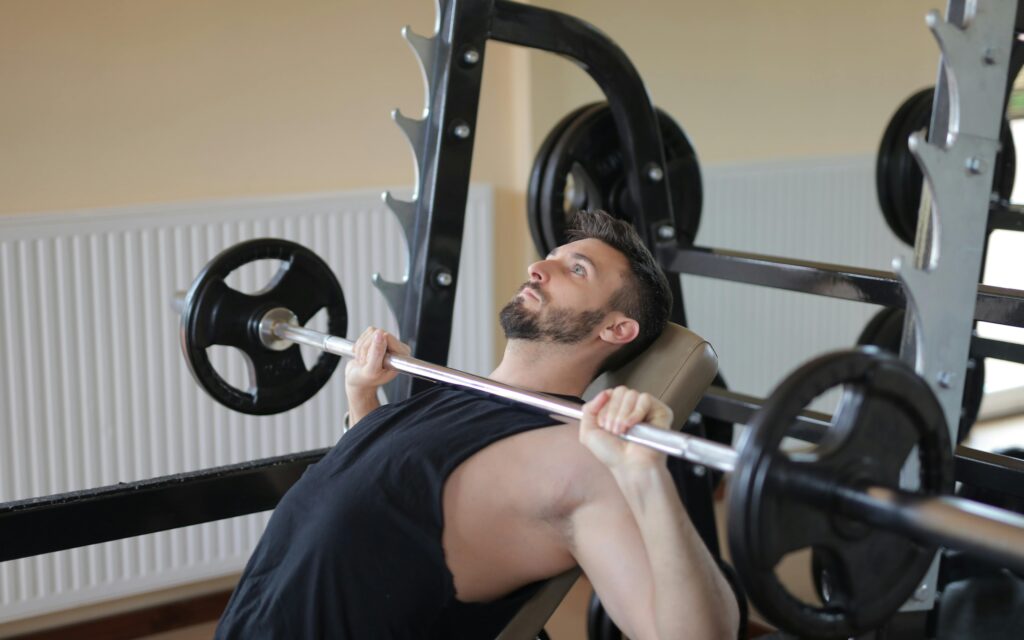
Neck pain from bench press is a common issue that many lifters face, often caused by muscle strain, poor positioning, or overuse during the exercise. This discomfort can range from a mild, achy sensation at the base of the neck to sharp pain that radiates toward the shoulder blades. Understanding the reasons behind this pain is essential to addressing it effectively.
The most common causes of neck pain from bench press include jamming your head into the bench, lifting your head off the bench repeatedly, shrugging your shoulders during the lift, upper back stiffness limiting mobility, and sudden increases in training load. To reduce pain today, maintain a neutral head position with a slight chin tuck, reduce the weight and volume of your sets, tweak your setup to avoid excessive arching or shrugging, and consider swapping to variations like dumbbell presses or push-ups. If you experience arm numbness, progressive weakness, or worsening symptoms despite adjustments, it’s time to get a professional evaluation.
The good news is that neck pain from bench press is often manageable, but some cases may require a short pause from barbell bench while symptoms settle. With the right adjustments and guidance from a physical therapist at Movement Solutions Physical Therapy, lifters in Greenville, SC, can continue bench pressing while reducing discomfort and preventing further injury.
What Neck Pain From Bench Press Usually Is (And Is Not)
Most bench-related neck pain comes from irritated muscles and joints in the neck and upper back. It is often about how you are setting up, bracing, and positioning your head on the bench. Not some hidden structural disaster.
Pain does not automatically mean a slipped disc or permanent damage. Think of it as a signal that the load or position is not matching what your neck can handle right now. Your body is asking for an adjustment.
Common symptom patterns include:
Aching at the base of the neck after sets
Tightness into the upper traps that lingers for days
Discomfort that spreads toward the shoulder blade or behind the shoulder
A cramping or burning feeling in the front of the neck
What this usually is not: severe nerve damage, fracture, or serious disease. Those are rare, especially without major trauma. However, certain symptoms deserve prompt attention.
Urgent red flags (seek immediate medical care):
Symptoms worsening quickly day over day
General medical red flags (less common but important to mention):
Recent significant trauma
Unexplained severe night pain
History of cancer or systemic illness signs
These general red flags are not specific to bench pressing but warrant prompt evaluation if present. For most people, the path forward is adjusting technique and building tolerance.
How Your Neck, Upper Back, and Shoulders Affect the Bench Press
The cervical spine is made of seven small bones stacked on top of each other, connected by facet joints, cushioned by discs, and supported by layers of muscles. These muscles run from your skull down into your upper back and shoulder blades.
When you bench press, your neck is not just resting passively on the pad. It is helping stabilize your head while your shoulder blades, chest, and arms generate force. The neck is part of the system, even though it is not the primary mover.
Here are the key players:
Front-of-neck muscles like the sternocleidomastoid. These kick in hard if you lift your head off the bench to watch the bar.
Back-of-neck muscles and small joints near the base of the skull. These get loaded when you jam your head into the pad.
Upper traps and levator scapulae. These connect your neck to your shoulder blades and tend to get overworked with poor scapular control.
The thoracic spine, or upper back, between your shoulder blades. This needs to extend and move for a solid bench setup.
If any of these areas are stiff, weak, or already fatigued, the neck picks up the slack. That is when pain starts showing up after pressing sessions.

Main Causes: Why Bench Press Triggers Your Neck Pain
Most people in Greenville, SC who come in for bench-related neck pain have a mix of technique issues, mobility limits, and training errors. Rarely is it just one thing. Let’s break down the common culprits.
Cause 1: Driving Your Head and Neck Into the Bench
Some lifters push the back of their head hard into the bench to feel tight or to help with leg drive. This loads the small facet joints at the back of the neck and compresses tissues that may already be irritated. The result is often a sharp or pinchy pain near the base of the skull or along one side of the neck.
Other lifters do the opposite. They lift their head off the bench on every rep to spot the bar or watch the weight move. This overworks the front-of-neck muscles, which have to hold the head up while everything else is pinned down. The feeling here is more of a burning or cramping sensation.
Both extremes make the neck do more than it needs to during what should be a chest exercise.
Head jammed into pad: sharp, focal pain near skull base or side of neck
Head lifted repeatedly: burning, cramping in front of neck, achy traps
A neutral head position, resting lightly on the bench with a slight chin tuck, usually feels much better.
Neck pain during bench pressing is commonly caused by improper form, including pushing the head into the bench, excessive neck tension, or hiking shoulders, leading to muscle strain and sometimes nerve-like symptoms (tingling, numbness). Compensation during the lift often leads to neck pain, indicating the importance of proper setup and weight management.
Cause 2: Shoulder Blade Position and Upper Back Stiffness
Pinching your shoulder blades together and tucking them down, often called scapular retraction and depression, is a common cue for bench pressing. It creates a stable base. But some lifters overdo this, yanking their shoulder blades so hard that the upper back cannot move at all.
When the thoracic spine is locked in place, the lower neck has to pick up the motion during your arch and setup. This can irritate the joints around C5, C6, and C7, the segments where most neck problems show up.
Poor scapular control also leads to shrugging. If your shoulders creep toward your ears during the press, the upper traps and levator scapulae work overtime. Over time, this creates chronic muscle tension that pulls on the neck with every rep.
From the side, a coach might see the lifter’s neck cranked into extension, shoulder blades pinned but upper traps bulging, and little movement through the upper back. That setup often leads to neck discomfort.
Cause 3: Volume, Load, and Training Errors
Sudden jumps in weight, high-volume bench phases, or multiple pressing days per week can outpace what your neck and surrounding muscles are prepared to handle.
Consider a typical week that sneaks up on you:
Monday: heavy bench, 5×5
Wednesday: overhead press, 4×8
Friday: incline dumbbell press, 4×10
Plus dips, push-ups, and 8 hours at a desk each day
That is a lot of pressing and a lot of time with your shoulders and neck in static positions. The neck and upper traps end up “on” almost constantly.
Fatigue also breaks down technique. On your last heavy set, the bar might drift toward your face, your arch might collapse, or you might start lifting your head to grind out reps. All of these increase neck strain when you are already tired.
Training smarter, with small load changes, planned deloads, and rotating grips, usually beats pushing through pain when the neck is already irritated.
Cause 4: Desk Posture and Daily Habits That “Pre-Load” Your Neck
Long hours at a computer, driving, or scrolling on your phone with a forward head and rounded shoulders keeps neck muscles tight and fatigued before you even walk into the gym.
When you start a heavy pressing session from an already worn-out, stiff neck, bench day becomes the “last straw.” The same weight that felt fine last week now triggers pain because your tissues are starting the session with less capacity.
Stress and poor sleep also lower tissue tolerance. Your body does not separate work stress from training stress. It all adds up.
Fixing bench press form without addressing daily posture and recovery often leads to the pain returning. Both sides of the equation matter.
What You Can Do Now At Home (And In The Gym) To Calm Neck Pain And Keep Benching
You do not have to stop all training. But you should respect the neck for a couple of weeks while you change how you move. Here is a practical checklist.
Step 1: Short-Term Pain Calming
For the first few days, focus on calming things down.
Use heat or ice for 10 to 15 minutes, whichever feels better, and stop if symptoms flare.
Do gentle neck range of motion. Slow nods, turns, and sidebends. Stay under a 3 to 4 out of 10 on the pain scale. Gentle neck stretches, such as neck rotations and lateral flexion, help alleviate neck pain after bench pressing.
Avoid aggressive stretching that provokes sharp pain or tingling down the arm.
Over-the-counter pain relief can help short-term if cleared with your healthcare provider. But do not use it just to push through heavy sets. That masks the signal your body is sending.
Step 2: Bench Press Modifications For The Next 2-3 Weeks
Reduce the bar weight to roughly 50 to 70 percent of your usual working sets. Stay 2 to 3 reps away from failure. This gives your neck time to settle while you keep training.
Focus on neutral head position:
Back of head resting lightly on the bench
Small chin tuck so the neck feels long
No lifting the head to watch the bar
No jamming the skull into the pad
Place feet flat on the floor with a moderate arch. Avoid an extreme arch that forces the neck into extension.
For bar path, lower the bar to roughly the lower chest or nipple line, not toward your throat. This reduces strain from flared shoulders.
If barbell bench still irritates the neck, try these substitutes:
Dumbbell bench press with a neutral grip, palms facing each other
Push-ups on a bar in a rack, keeping your head in line with your spine
Step 3: Mobility For Upper Back, Shoulders, And Neck
Improved neck mobility and upper back mobility help your body find a good bench setup without overusing the neck. Do these on off days or as part of your warm-up.
Thoracic extension over a foam roller Lie with the roller across your upper back. Support your head with your hands. Extend back over the roller slowly, then return. 1 to 2 sets of 10 slow reps.
Open-book rotations Lie on your side with knees bent. Rotate your top arm and upper back open toward the ceiling, letting your chest follow. 1 to 2 sets of 8 to 10 each side.
Doorway pec stretch Place your forearm on a doorframe, elbow at shoulder height. Step through gently until you feel a stretch across the chest. Hold 20 to 30 seconds, 2 to 3 times each side. Stay out of sharp shoulder pain.
Chin nods for deep neck flexors Lie on your back with knees bent. Gently nod your chin toward your chest, like making a small double chin. Hold 2 to 3 seconds. 2 to 3 sets of 8 to 10 light reps.
Step 4: Strengthening The Support System Around The Neck
When the shoulder blades and deep neck muscles are stronger, the neck does not have to work as hard during bench press. Do these exercises 2 to 3 times per week.
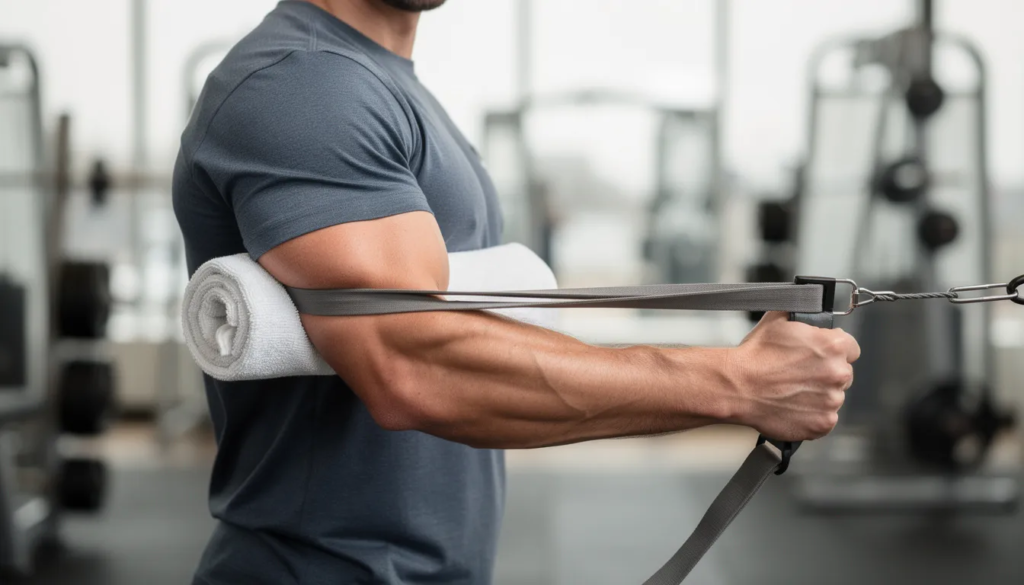
Scapular retraction rows with a band or cable Squeeze shoulder blades together as you pull. 3 sets of 12 to 15 reps.
Prone Y raises for lower traps Lie face down on a bench or floor. Raise arms overhead in a Y shape with thumbs up. Use light weight or no weight. 2 to 3 sets of 10 to 12 reps.
Isometric neck holds Sitting or standing, place your hand against your forehead and gently push your head into your hand. Hold 5 to 10 seconds. Repeat to each side and to the back. 3 sets in each direction, pain-free range only.
External rotation with a band Elbow at your side, rotate your forearm outward against band resistance. 3 sets of 12 to 15 each arm.
Expect some muscle soreness from these exercises. That is normal. Strong joint pain during the movement is not, so back off if that happens.
What To Avoid
High effort grinders and forced reps that fatigue form
Maximal arch positions that jam the neck into extension
Shrugging shoulders and losing scapular control during the lift
Lifting your head up to watch the bar on every rep
Piling pressing volume on top of poor sleep and long hours at a desk
How Physical Therapy Helps When Neck Pain Keeps Coming Back
The typical person who comes into Movement Solutions in Greenville, SC for bench-related neck pain is an active adult who likes to lift, has already tried rest and YouTube stretches, but the pain returns every time they bench again. Sound familiar?
Physical therapy looks for the root cause. That means assessing:
Neck joints and muscles for stiffness, weakness, or irritation
Thoracic spine mobility
Shoulder and scapular control
Technique issues with bench press and other lifts
A full evaluation includes watching your bench press setup. We look at how you position your feet, your arch, your shoulder blades, your head. We assess strength, mobility, and control through the whole chain.
The main tools include:
Specific exercises and progressions tailored to your limitations
Hands-on work when appropriate, like joint mobilization or soft tissue techniques for muscle health
Technique coaching at the bench to find a stronger, more comfortable setup
The plan is individualized. It is built around your training goals, sport, and schedule. Not a one-size-fits-all sheet of generic stretches. The goal is getting you back to performing exercises you enjoy without pain.
If pain persists despite these efforts, or if you experience numbness, tingling, or weakness in your arms, a physical therapist or healthcare provider can provide tailored assessments and rehabilitation plans specific to bench-related symptoms.
Timeline: How Long Until Bench Press Feels Good Again?
Recovery time depends on what is going on and how long symptoms have been present.
Mild, recent neck irritation: Often improves significantly within 2 to 4 weeks with good modifications and exercises.
More stubborn or longer-term pain: May take 6 to 8 weeks or more to rebuild tolerance, especially if there are posture or shoulder issues to address.
What usually improves first:
Less day-to-day ache and muscle tightness
Better head turning and neck mobility
Easier sleep positions
Placing a small pillow or rolled towel behind the neck may relieve pain while sleeping.
What takes longer:
Heavy bench sets at previous loads
Full confidence under the bar
Training pressing multiple days per week without symptoms
Track your progress with simple measures:
Rate pain before and after bench sessions on a 0 to 10 scale
Note what weight and volume you can handle without symptom flare
Watch for improvements in neck soreness the next day
Many neck muscle strains improve within days, but full resolution can take several weeks depending on severity and ongoing factors.
Small, steady progress is normal. Short setbacks can happen if life gets stressful, sleep drops, or training spikes. That does not mean you are back to square one. It means you adjust and keep moving forward.
FAQs About Neck Pain From Bench Press
These are the questions patients most often ask about experiencing neck pain from bench press.
Do I Need To Stop Bench Pressing If My Neck Hurts?
Most people do not need to stop completely. Changing how you bench and how much you are doing while symptoms are active is usually enough.
Training “around” the pain with lighter loads, better head position, and accessory exercises is often better for pain management than complete rest. You maintain muscle and movement patterns while allowing tissues to calm down.
If pain is sharp, radiates into the arm, or worsens each session, that is a sign to pull back more and get evaluated by a physical therapist or healthcare provider.
Is This A Disc Problem In My Neck?
Discs can be irritated, but many bench-related neck issues come from joints and muscles rather than severe disc injury.
Signs that might suggest disc involvement include:
Pain that travels into the shoulder blade or down the arm
Numbness or tingling in the arm or hand
Symptoms that worsen with certain neck positions
If you have these symptoms, get checked in person. A physical therapist or medical provider can sort out what is going on and design a safe plan. Most people do not need neck surgery. Conservative treatment works well in most cases.
How Should My Head Be Positioned During Bench Press?
Keep the back of your head resting lightly on the bench with a small chin tuck. Your neck should feel long and neutral, not jammed backward or lifted forward.
Avoid lifting your head up to watch the bar on every rep. Avoid pressing your skull forcefully into the pad.
Film a set from the side to check if your head is moving a lot between reps. If it is, that is worth correcting.
Using proper form during physical activity prevents neck pain and strengthens the neck, shoulder, and core muscles.
Can Poor Desk Posture Really Affect My Bench Press?
Yes. Prolonged forward-head and rounded-shoulder poor posture makes neck and upper back muscles work overtime before you even walk into the gym.
Starting a heavy pressing session from an already tired, stiff neck is a recipe for irritation. The bench press becomes the tipping point, not the only cause.
One simple daily change: stand up and move every 60 to 90 minutes. A quick upper back extension or shoulder roll at the office can help maintain better baseline tissue health.
When Should I See A Physical Therapist About Bench-Related Neck Pain?
Consider seeing a physical therapist if:
Pain has lasted more than 2 to 3 weeks despite basic changes
It keeps coming back every time you increase weight
There is numbness, tingling, or weakness in the arm or hand
Neck movement is getting more limited over time
Lifters in Greenville, SC often find it helpful to have a PT watch their bench setup and design a program so they can train confidently again. Getting professional help early often speeds up recovery and prevents ongoing issues.
Will Changing My Grip Or Bar Path Help My Neck?
A slightly narrower grip or a bar path that lands a bit lower on the chest can often reduce neck and shoulder strain. These adjustments change how forces travel through your body during the lift.
What works best depends on your shoulder mobility and build. Some trial and error is normal. Making small changes one at a time and tracking how the neck responds is the smart approach.
Next Steps: Getting Help For Neck Pain From Bench Press In Greenville, SC
Neck pain from bench press is usually manageable with the right mix of technique tweaks, mobility work, and strength training. You do not have to choose between lifting and feeling good. With the right approach, you can have both.
If you are in Greenville, SC or nearby and want a thorough assessment of your neck, shoulders, and bench technique, reach out to Movement Solutions Physical Therapy. You can schedule a one-on-one evaluation or just ask a question by phone or email if you are not ready to book yet.
The goal is getting you back to bench pressing with more confidence, less neck pain, and a plan that actually fits your training life.
