
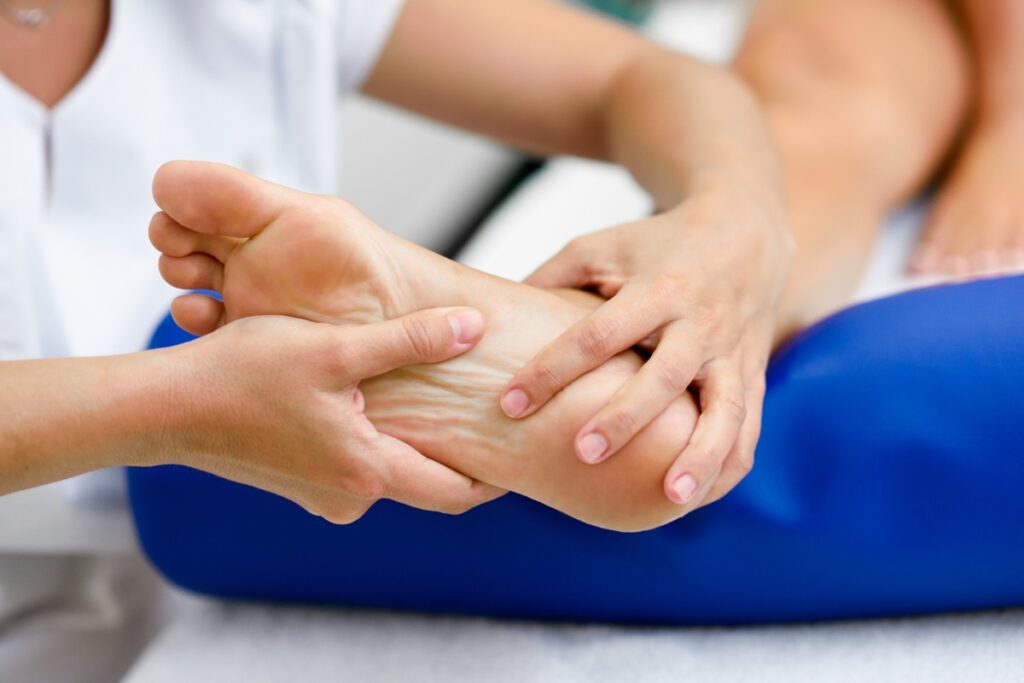
If your first steps out of bed feel like a nail in the heel, you are in the right place, because learning how to fix plantar fasciitis is very doable for most people. Plantar fasciitis is one of the most common causes of heel pain. It involves irritation of the plantar fascia, a thick band of tissue that runs across the bottom of your foot and connects your heel bone to your toes. The classic sign is stabbing pain with your first steps in the morning that eases as you move, then returns after long periods of standing or when you get up from sitting.
What’s Really Going On
Plantar fasciitis usually develops over time. It can come from faulty walking, running, or jumping mechanics, or simply from repetitive load, and it affects athletes and non-athletes alike. Almost any weight-bearing activity, from running and jumping to squatting, lunging, lifting from the ground, and even walking, can aggravate it.
Here is the important part for how to fix plantar fasciitis: the heel is often where you feel it, but not where the problem starts. In many cases the fascia and calf muscles have lost mobility, the small arch (intrinsic) muscles of the foot are weak or stiff, and the big-toe joint has stiffened. Add in weakness or imbalance at the hip and core, and your walking and running mechanics shift in ways that keep overloading the fascia.
Step 1: Calm the Flare
The first thing we usually recommend is a short break from the aggravating activity, which lets the irritation settle. Rest almost always eases the pain, so it is a fine first move. But rest alone is not how to fix plantar fasciitis, because the moment you return to your activity, the pain tends to come right back. The break just buys you a window to address the real drivers.
Step 2: Restore Mobility
Once things calm down, the next step is restoring motion. Hands-on therapy can ease pain and improve mobility quickly when the right areas are targeted, and you reinforce it with active mobility work for the plantar fascia, calves, and big toe. The JOSPT clinical practice guideline for heel pain supports manual therapy, calf and plantar-fascia stretching, and foot orthoses to reduce pain and improve function.
Supportive measures like taping and night splints can help too, especially for that brutal morning pain. Do not neglect the big toe: gently mobilizing the first toe joint and waking up the small arch muscles with short-foot drills gives the fascia the support it has been missing, and it is one of the easiest early wins in how to fix plantar fasciitis.
Step 3: Load the Fascia (Why Stretching Alone Falls Short)
This is the step most people miss, and it is the heart of how to fix plantar fasciitis for good. Stretching feels productive, but the tissue also needs to get stronger. If weakness is present, we start with activation drills for the muscles that are not firing, then build toward strength and single-leg stability.
The research is compelling here. In a randomized trial, patients who did high-load strength training had significantly better outcomes at three months than those who only stretched. Loading the fascia, rather than only lengthening it, is what tends to speed up recovery. A simple way to begin is a slow heel raise with a towel rolled under the toes, then progress gradually by adding load and a slower tempo so the tissue adapts and gets more resilient.
Step 4: Fix the Whole Chain and Your Shoes
Finally, widen the lens. If imbalances at the hip and core are changing how you move, addressing them is part of how to fix plantar fasciitis so it does not keep coming back. Improving ankle mobility and overall movement quality takes load off the heel. Footwear matters too: transitioning toward a lower-drop shoe (0 to 4 mm) and practicing some barefoot activity can be especially powerful for rehabbing the fascia, since it wakes up the foot’s own muscles. If flat feet are part of your picture, our guide on the causes of flat feet is a useful companion.
Frequently Asked Questions
How long does plantar fasciitis take to heal?
Many people improve within a few weeks to a few months once they combine calming the flare with mobility and loading. Longstanding cases can take longer, which is exactly why addressing the cause, not just the symptom, matters for how to fix plantar fasciitis rather than chasing temporary relief.
Should I just stretch my calf?
Stretching helps in the short term, but on its own it is usually not enough. Pairing calf and plantar-fascia mobility with progressive strengthening produces better, faster results than stretching alone. Loading is the part of how to fix plantar fasciitis that stretching simply cannot replace.
Do I need orthotics or night splints?
They can help, especially early on and for stubborn morning pain, and the clinical guidelines support them. Think of them as useful supports alongside the mobility and strength work, not a standalone cure.
Can I keep running with plantar fasciitis?
Often with modifications. The goal is to reduce the aggravating load temporarily while you rebuild the foot, not to stop moving entirely. An assessment shows how much to scale back and how to progress, which keeps how to fix plantar fasciitis from turning into months on the sidelines.
Get Heel Pain Help in Greenville, SC
Addressed with a thorough assessment and the right plan, plantar fasciitis usually resolves relatively quickly. Ignore it and keep loading a poor pattern, though, and it can turn into stubborn, chronic heel pain. If you think you may be developing a plantar fascia problem, the physical therapists at Movement Solutions in Greenville, SC would be glad to assess it and show you how to fix plantar fasciitis for your feet specifically.
We offer a free 15-minute phone consultation to talk through your options. Call us at (864) 558-7346 and ask how we can help.
Medically reviewed by Dr. Tim Varghese, PT, DPT · Last updated August 21, 2026

Dr. Tim Varghese, PT, DPT
Dr. Tim Varghese, PT, DPT, is the founder of Movement Solutions Physical Therapy in Greenville, SC. He earned his Doctor of Physical Therapy from the Medical College of Georgia and is a Board-Certified Orthopedic Clinical…
More about Dr. Tim →