
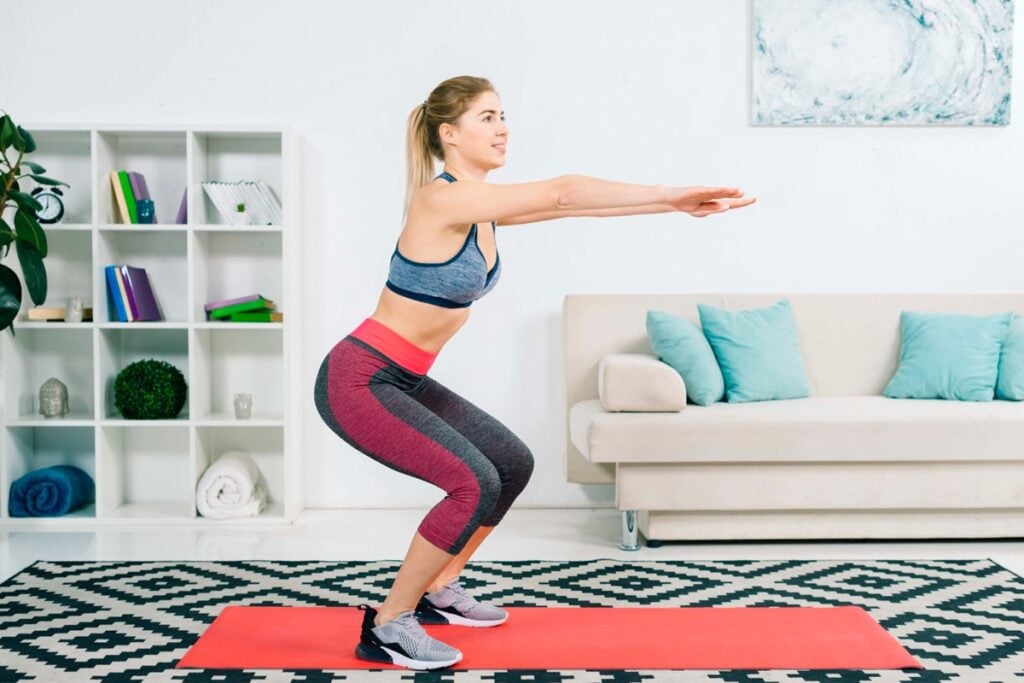
Hip pain when squatting is one of the most common problems we treat, and it usually shows up as a sharp pinch at the front of the hip as you sink into the bottom of a squat. The reassuring news is that this is almost always a mechanical problem you can fix, not a sign your hip is worn out. Get the right areas moving and firing, and most people get back to squatting comfortably.
What Causes That Front-of-Hip Pinch
More often than not, the pinch is a mechanics problem, not a “bad hip.” Imbalances at the ankle, trunk, and glute muscles can tilt the pelvis, which changes how the ball and socket line up when you stand, walk, and squat. When you then descend into a squat, the joint runs out of clean room and the tissues at the front get pinched, especially if the core and spinal muscles are weak. Sometimes the shape of the bone plays a role too, in the form of cam or pincer variants, part of what is called hip impingement (FAI). It is worth knowing that these bone shapes are common in pain-free hips as well, so a finding on imaging does not doom your squat.
Because hip pain when squatting is multifactorial, and can also overlap with hip arthritis or hip bursitis, the only way to know your specific drivers is a full-body movement assessment. This shows up often in lifters chasing depth, in people returning to squats after time off, and in desk workers whose stiff hips meet a heavy barbell, all common backdrops for hip pain when squatting.
First, the Reassuring Part: Surgery Is Rarely Step One
If someone mentioned hip impingement and surgery in the same breath, take a slow breath. A major randomized trial (UK FASHIoN) found that physiotherapist-led conservative care meaningfully improved hip impingement symptoms, and it is a legitimate first-line option rather than heading straight to the operating room. For most people, addressing hip pain when squatting starts with movement, not a scalpel.
Way 1: Swap, Don’t Stop
You do not have to stop training. The smart move is relative rest: if deep squats pinch, temporarily swap in hinge movements like deadlifts and kettlebell swings that load the hips without the deep flexion that provokes you. That gives the irritation a chance to settle while you keep getting stronger. If pain lingers, hands-on therapy helps, and soft-tissue work on the hip muscles plus gentle joint distraction can quickly ease hip pain when squatting so you can start rebuilding. That early calm is not the fix on its own, but it clears the way for the mobility and strength work that is.
Way 2: Free Up the Ankles and Hips
A squat is a whole-chain movement, and a stiff ankle forces the hip to compensate. Research shows that ankle dorsiflexion and hip flexion range of motion are strongly associated with how deep you can squat, so opening those up lets you reach depth without jamming the front of the hip. Working on ankle mobility and hip mobility is often the fastest way to take the pinch out of the bottom of the squat, and it is a cornerstone of resolving hip pain when squatting.
Way 3: Activate, Then Load
Mobility earns you room; strength lets you use it. If key muscles are not firing, we start with activation for the hip flexors and extensors and the deep core, then teach you to coordinate them during the squat itself, which is hard to feel without good coaching. Simple cues like sitting back, spreading the floor with your feet, and bracing the core often clean up the pattern faster than any single stretch. From there, progressive loading with goblet squats, then back and front squats, builds durability through the whole lower body. This is the same “earn it, then load it” logic behind our how to squat deeper guide, and it is what keeps hip pain when squatting from returning once you add weight back.
When to Get It Checked First
Most squat-related hip pain is safe to work on, but see a provider promptly if your hip catches, locks, or gives way, if you have deep groin pain with fever, night pain that will not settle, or pain that started after a fall or twist. A quick assessment sorts out a simple mechanical issue from something that needs imaging first.
Frequently Asked Questions
Is hip pain when squatting always impingement?
No. Impingement (FAI) is a common cause, but stiffness, weakness, and poor squat mechanics produce the same front-of-hip pinch, and they are very treatable. An assessment tells you which factors are actually driving yours.
Do I need surgery for hip impingement?
Usually not as a first step. High-quality research shows physiotherapist-led care improves impingement symptoms, so a real trial of conservative treatment comes first for most people, with surgery reserved for those who do not respond.
Should I stop squatting entirely?
Rarely. Swapping to hip hinges and pain-free ranges while you rebuild usually beats stopping cold. The goal is to keep training around the pain, not to shut down, and staying in the game is a big part of solving hip pain when squatting for good.
How deep should I squat?
As deep as you can go without the pinch, then work to expand that range with mobility and control. Depth is earned, and forcing it through pain is what tends to keep hip pain when squatting hanging around.
Squat Strong Again in Greenville, SC
Addressed with a thorough assessment and the right plan, squatting without hip pain is very achievable, while grinding through the pinch can lead to deconditioning or a more stubborn problem. If hip pain when squatting is limiting your training, the physical therapists at Movement Solutions in Greenville, SC would be glad to help. Explore our hip pain resources to start.
We also offer a free 15-minute phone consultation to talk through your options. Call us at (864) 558-7346 and ask how we can help.
Medically reviewed by Dr. Tim Varghese, PT, DPT · Last updated August 21, 2026

Dr. Tim Varghese, PT, DPT
Dr. Tim Varghese, PT, DPT, is the founder of Movement Solutions Physical Therapy in Greenville, SC. He earned his Doctor of Physical Therapy from the Medical College of Georgia and is a Board-Certified Orthopedic Clinical…
More about Dr. Tim →