
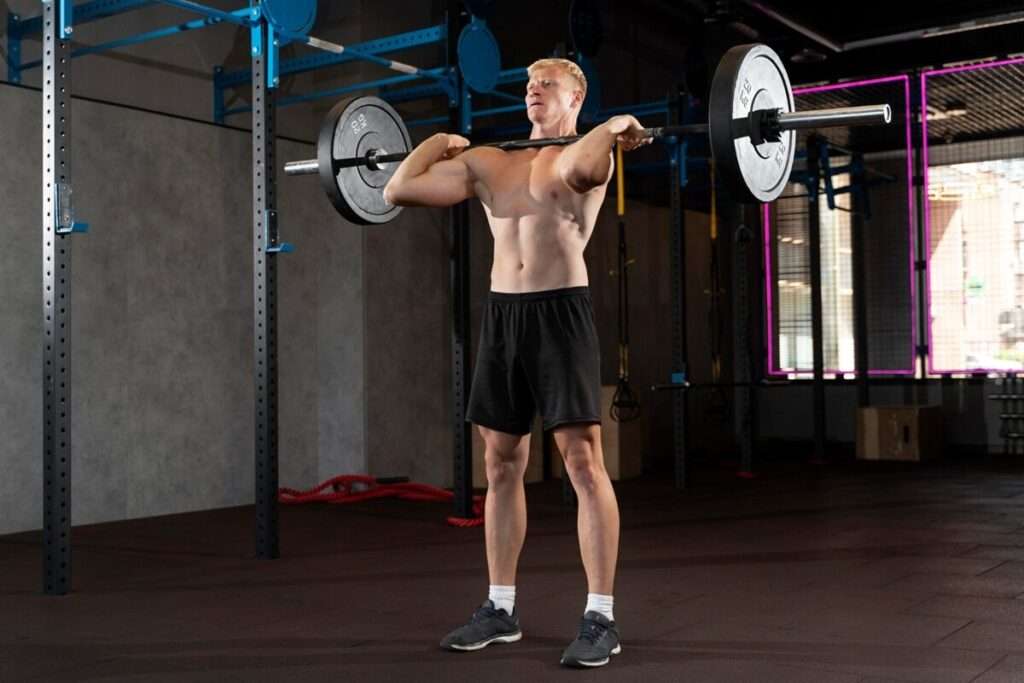
Shoulder pinching when lifting is almost always a fixable mechanics problem, not lasting joint damage. Whether it flares on a bench or overhead press, it usually comes from the same handful of drivers, like a poorly moving shoulder blade and tight or weak supporting muscles. A simple, staged plan resolves most cases.
Shoulder pinching when lifting is one of the most common problems we see in active adults who love the gym. The pinch might show up at the front of the shoulder, the top, the outside, or deep in the joint, and sometimes it radiates down the arm. Whether it flares on a bench press or an overhead press, though, the underlying causes and the fix are largely the same. Here’s what’s driving it and the simple four-step plan we use to get you lifting pain-free again.
What’s Behind the Pinch
Shoulder pinching when lifting can trace back to several diagnoses, including rotator cuff tendonitis or tears, biceps tendonitis, impingement syndrome, labral tears, frozen shoulder, or shoulder arthritis. An exam is the only way to know exactly which one you’re dealing with, but most cases share the same handful of drivers:
- Weak shoulder stabilizers — the rotator cuff, lower trapezius, serratus anterior, and rhomboids
- Stiff lats and mid-back (t-spine) that limit your overhead mobility
- An “anteriorly tilted” shoulder blade from muscle imbalance, which pinches the front of the shoulder during pressing
- Poor lifting mechanics and bracing, so the shoulder takes stress it shouldn’t
The best way to pin down which of these is causing your shoulder pinching when lifting is a movement assessment.
The Fix: 4 Steps to Lifting Pain-Free
The framework for beating shoulder pinching when lifting is the same whether the culprit is bench pressing or overhead work—only the details change.
Step 1: Calm It Down
Start by taking a short break from the movements that irritate the shoulder, usually bench and overhead pressing, so inflammation can settle. If pain lingers, hands-on therapy to the lats, upper traps, and rotator cuff can break a stubborn pain cycle. You can do a version of this yourself with a foam roller or lacrosse ball, and in tougher cases, dry needling with electrical stimulation helps.
Step 2: Wake Up the Stabilizers
Once pain is manageable, retrain the muscles that aren’t firing, commonly the lower trap, infraspinatus (rotator cuff), lats, and serratus anterior. Reliable starting exercises include the side-lying shoulder rotation for the rotator cuff, the supine pullover for the lats, and the push-up plus and wall slide for the serratus. Strengthening the rotator cuff and scapular muscles is one of the most effective things you can do for a cranky shoulder.
Step 3: Restore Overhead Mobility
The shoulder is a ball-and-socket joint that should move freely in all directions. To get there, open up the lats and mid-back with scapular wall slides, half-kneeling band pulldowns, and tall-kneeling t-spine rotations. Better overhead mobility means the shoulder isn’t forced into positions that pinch.
Step 4: Rebuild Strength With Smart Lifting
Finally, load the pattern with compound movements that train several muscle groups at once—pull-ups (or weighted pulldowns), rows, military presses, and push-ups. To make sure the smaller stabilizers stay engaged, add carries and drills like the kettlebell armbar and Turkish get-up. The key cue throughout: generate tension through your lats to protect the shoulder as you press and pull. That single habit prevents a lot of shoulder pinching when lifting.
Small Form Tweaks for Bench and Overhead Pressing
Sometimes shoulder pinching when lifting comes down to a few setup details rather than a deep problem:
- On the bench press: set your shoulder blades back and down, keep a slight arch, and tuck your elbows to about 45 degrees instead of flaring them out to 90. Don’t let the bar drift up toward your neck—a slightly narrower grip often takes pressure off an irritated shoulder.
- On overhead pressing: make sure you actually have the mobility to get the bar overhead without arching your low back. If you don’t yet, a landmine press or neutral-grip dumbbell press lets you keep training while you build that range.
Small changes like these often calm symptoms right away while the bigger fixes take hold.
How Long Until You Can Lift Pain-Free?
Many people feel the pinch settle within a week or two once they back off the aggravating pressing and start the right mobility and activation work. Rebuilding the strength that keeps shoulder pinching when lifting from returning usually takes a few weeks to a couple of months, depending on how long it’s been going on. The goal isn’t to rest forever; it’s to load the shoulder smartly so it gets more resilient.
Mistakes That Keep the Pinch Around
A few habits keep shoulder pinching when lifting hanging on longer than it should:
- Pressing through sharp pain and hoping it fades—repetitive irritation rarely resolves on its own.
- Only stretching while skipping the stabilizer strength work that actually protects the joint.
- Going back to heavy bench and overhead pressing before mobility and control return.
Fixing the pattern beats gritting through it every time.
Warm Up Before You Press
A few minutes of prep before your working sets goes a long way toward avoiding shoulder pinching when lifting. Start with light band pull-aparts and band external rotations to switch on the rotator cuff and mid-back, run through a few scapular wall slides for mobility, and do a couple of ramp-up sets with an empty bar or light dumbbells before loading heavy. Warming up this way primes the exact muscles that protect the shoulder, so the joint moves cleanly from your first hard rep instead of getting cranky halfway through the session.
Frequently Asked Questions
Is it okay to lift through shoulder pinching?
A little tightness that warms up and fades is usually fine, but sharp, pinching pain is a signal to change something—not push harder. Grinding through it tends to drag the problem out. Lower the load, adjust the movement, or swap the exercise instead.
Should I stop lifting completely?
Almost never. Complete rest tends to leave the shoulder stiffer and weaker. The better move is to keep training around the pain. Modify grip and range, drop to lighter loads, and pick movements that don’t provoke symptoms while you rebuild.
How do I know if it’s just a pinch or something more serious?
Shoulder pinching when lifting is often mechanical impingement, an irritated tendon, or a mobility limitation, and settles with the right plan. Clear weakness, night pain, or a catching sensation that won’t quiet down can point to something bigger, like a rotator cuff or labral tear, and is worth having assessed in person.
Will stretching fix it on its own?
Rarely. Stretching a tight lat or opening the mid-back can help part of the picture, but shoulder pinching when lifting usually needs stabilizer strength and better mechanics too. Mobility without control just gives you more range you can’t yet manage.
Should I see a doctor or a physical therapist first?
For pain that came on gradually with no specific injury, a physical therapist is a smart first stop, as they can pinpoint the driver and build the plan. See a physician sooner if the pain followed a fall or accident, or comes with significant weakness or numbness.
When to See a Physical Therapist
Most shoulder pinching when lifting responds well to the plan above, but get it checked sooner if you have weakness, numbness, or tingling down the arm, pain after a specific injury, or symptoms that just aren’t improving. At Movement Solutions in Greenville, SC, our physical therapists find the real driver of your shoulder pain and build a plan to get you back under the bar with the same functional strength approach we use with every lifter.
Reach out today to ask about cost and availability, or call (864) 558-7346. We’d be glad to help.
Medically reviewed by Dr. Tim Varghese, PT, DPT · Last updated September 25, 2026

Dr. Tim Varghese, PT, DPT
Dr. Tim Varghese, PT, DPT, is the founder of Movement Solutions Physical Therapy in Greenville, SC. He earned his Doctor of Physical Therapy from the Medical College of Georgia and is a Board-Certified Orthopedic Clinical…
More about Dr. Tim →