
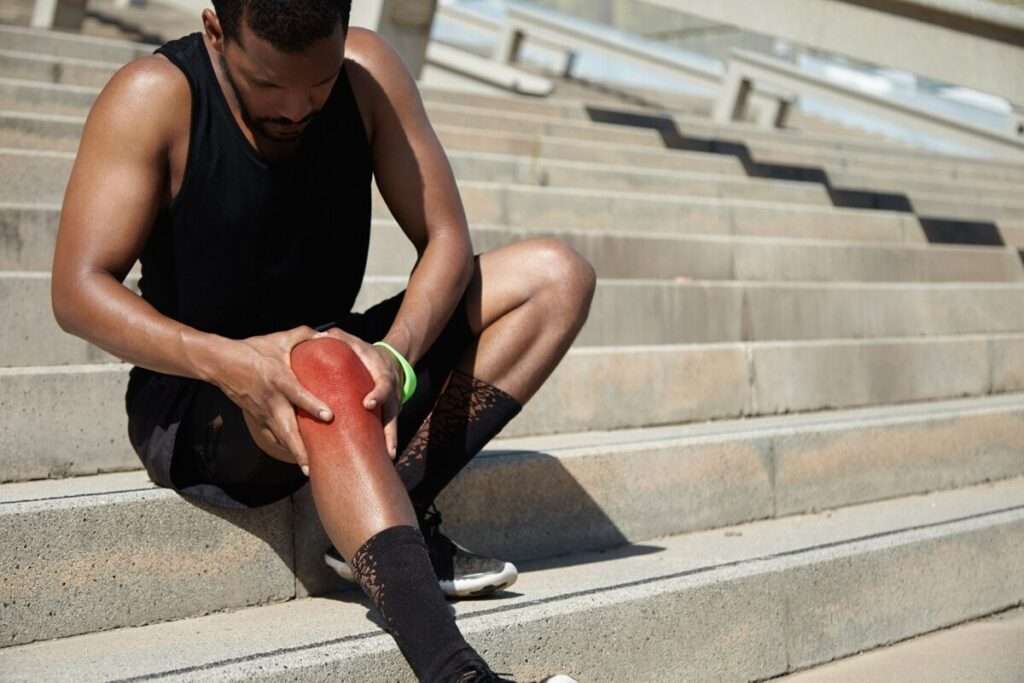
The right pes anserine bursitis exercises can calm inner-knee pain and rebuild the strength that keeps it from coming back. Pes anserine bursitis is a common cause of inner-knee pain in active adults in their 40s, 50s, and 60s, and while it can be uncomfortable, the outlook is encouraging. Below are five safe pes anserine bursitis exercises, plus how to tell the condition apart from a meniscus tear and when to get help.
Table of Contents
ToggleWhat Is Pes Anserine Bursitis?
The pes anserine bursa is a small, fluid-filled sac located two to three inches below the knee joint on the inside of the lower leg. It sits beneath the confluence of three tendons, the sartorius, gracilis, and semitendinosus, and keeps them from rubbing on the shinbone (tibia). When that bursa becomes irritated and inflamed, the result is pes anserine bursitis, one of the most common causes of pain along the inner knee.
According to StatPearls, pes anserine bursitis arises from inflammation of the bursa between the medial tibia and those three tendons, and it is diagnosed clinically, meaning imaging is usually not required. Reassuringly, the same review notes the condition has a generally favorable prognosis, which is why the right exercises make such a difference.
Pes Anserine Bursitis vs. a Meniscus Tear
The condition is often mistaken for a meniscus tear because both cause pain on the inside of the knee. There is a helpful way to tell them apart. With bursitis, the pain sits two to three inches below the joint line and often comes with tenderness along the sartorius, which runs diagonally down the front of the thigh from the outer hip to the inner knee. Meniscus pain, by contrast, usually sits right on the joint line, and a significant meniscus tear can cause catching or locking of the knee at the end ranges of bending and straightening. A movement assessment can confirm which pes anserine bursitis exercises are safe to start.
What Causes Pes Anserine Bursitis?
Pes anserine bursitis usually develops over time from faulty squatting or running mechanics and repetitive activity, and it affects athletes and non-athletes alike. Common contributors include incorrect training technique, a lack of core and lower-body stability or mobility, and sudden increases in running volume. It is also frequently linked to a valgus, or “knock-knee,” position during squats and lunges, stiff hamstrings, flat feet, or excessively high arches.
Certain factors raise the risk further. Underlying knee osteoarthritis, higher body weight, and female sex are all associated with the condition. It shows up most often in younger athletes, middle-aged women returning to exercise, and adults roughly 50 to 80 years old who have knee osteoarthritis. Painful movements typically include running, walking, stairs, squats, and lunges, and symptoms often feel worse first thing in the morning or after a long stretch of sitting, when the muscles are stiff. Addressing those drivers is exactly what the right pes anserine bursitis exercises are designed to do.
5 Pes Anserine Bursitis Exercises to Ease the Pain
The most effective plan pairs stretching of the muscles that attach at the pes anserine with strengthening of the quads and hips. Start gently, stay in a pain-free range, and back off anything that sharply increases your inner-knee pain. Done consistently, these pes anserine bursitis exercises address the muscles that drive most cases.
1. Hamstring Stretch
The semitendinosus is a hamstring that attaches right at the pes anserine, so easing hamstring tension takes direct strain off the bursa. Lying on your back, loop a strap around one foot and gently straighten the leg toward the ceiling until you feel a comfortable stretch behind the thigh. Hold, breathe, and avoid bouncing. It is a gentle place to begin your pes anserine bursitis exercises.
2. Inner-Thigh (Adductor) Stretch
The gracilis is an inner-thigh muscle that also attaches at the pes anserine. In a seated butterfly or a gentle side lunge, ease into a stretch through the groin and inner thigh. Loosening the adductors is one of the most overlooked pes anserine bursitis exercises.
3. Glute Bridge
Lying on your back with knees bent, squeeze your glutes and lift your hips, then lower with control for two sets of ten. Strong glutes control the thigh bone so the knee stops drifting inward, which reduces the valgus stress that irritates the bursa.
4. Wall Sit
Slide down a wall until your knees are bent to a comfortable, pain-free angle and hold. This closed-chain quad move builds strength around the knee without the sharp loading of a deep squat, making it one of the safest pes anserine bursitis exercises to start with.
5. Side-Lying Hip Abduction
On your side, lift the top leg up and slightly back, keeping it straight, then lower slowly. Building hip strength stops the thigh from collapsing inward, protecting the inner knee during walking, squatting, and running. You can find demonstrations of these movements in our video library.
Do These Exercises Actually Work?
Yes, and the evidence is encouraging. Physical therapy is a core part of managing pes anserine bursitis, focused on stretching and strengthening the muscles around the knee and hip. A combined program of hamstring stretching alongside quad and hip strengthening typically eases the pain within about six to eight weeks. That is why the best pes anserine bursitis exercises target the hips and thighs, not just the sore spot on the inner knee.
A quick note on sequencing. If the bursa is very irritated, calm it first with a short break from the aggravating activity so the inflammation can settle. Once pain eases, restore mobility at the hips and ankles, then build strength through movement patterns like the hinge, squat, and lunge. Learning to integrate the core and hips into those patterns is what keeps the problem from coming back.
When to Seek Support
If pain persists, hands-on therapy can be effective for relief and improved mobility. Soft-tissue mobilization, and in some cases dry needling of the sartorius, can settle symptoms quickly, and self-myofascial release with a lacrosse ball or foam roller can help between visits. For stubborn cases that do not respond to conservative care, a doctor may consider a corticosteroid injection, and surgery is rarely needed. The only way to know exactly what is driving your pain is to have an assessment performed, which also ensures your pes anserine bursitis exercises are matched to your knee.
Frequently Asked Questions
How long do pes anserine bursitis exercises take to work?
With a consistent program, most people feel meaningful relief within six to eight weeks. Very irritated cases may need a short period of relative rest first, followed by a gradual return to loading and the exercises above.
Can I keep exercising with pes anserine bursitis?
Often yes, in a modified way. Reduce the volume and the movements that flare your inner knee, keep working on the hip and hamstring pes anserine bursitis exercises above, and let your symptoms guide how quickly you progress. Sharp or worsening pain is a signal to back off and get assessed.
What pes anserine bursitis exercises should I avoid?
Ease off deep squatting and lunging, sudden jumps in running mileage, and any drill that lets the knee cave inward. Rebuild control in pain-free ranges first, then reintroduce heavier loading as your strength and mechanics improve.
Get Relief From Inner-Knee Pain in Greenville, SC
With a specialized physical therapy program built around the right pes anserine bursitis exercises, overcoming this condition is very achievable. Ignoring the pain and pushing through repetitive activity, on the other hand, can lead to a further decline in your knee health. If you are worried about inner-knee pain, the physical therapists at Movement Solutions in Greenville, SC would be glad to help.
We invite you to request a knee consultation with one of our specialists. It is a chance to ask questions, get clarity about your knee pain, and build confidence that we can help.
If you are in knee pain but unsure what to do, call us at (864) 558-7346 and ask how we can help.
Medically reviewed by Dr. Tim Varghese, PT, DPT · Last updated August 28, 2026

Dr. Tim Varghese, PT, DPT
Dr. Tim Varghese, PT, DPT, is the founder of Movement Solutions Physical Therapy in Greenville, SC. He earned his Doctor of Physical Therapy from the Medical College of Georgia and is a Board-Certified Orthopedic Clinical…
More about Dr. Tim →