
Do you get pain or stiffness in your muscles and joints, or feel like your workouts are not delivering the results you want? If so, you may not be moving well through one or more of the functional movement patterns. When you can move well through these patterns, you tend to get better results from training, feel less pain and stiffness, and lower your risk of injury. Master them and you build a body that holds up to whatever life and your workouts ask of it.
The 6 Functional Movement Patterns
There are six functional movement patterns that show up in nearly everything you do:
- Hinge (bending at the hips, like a deadlift or picking something up)
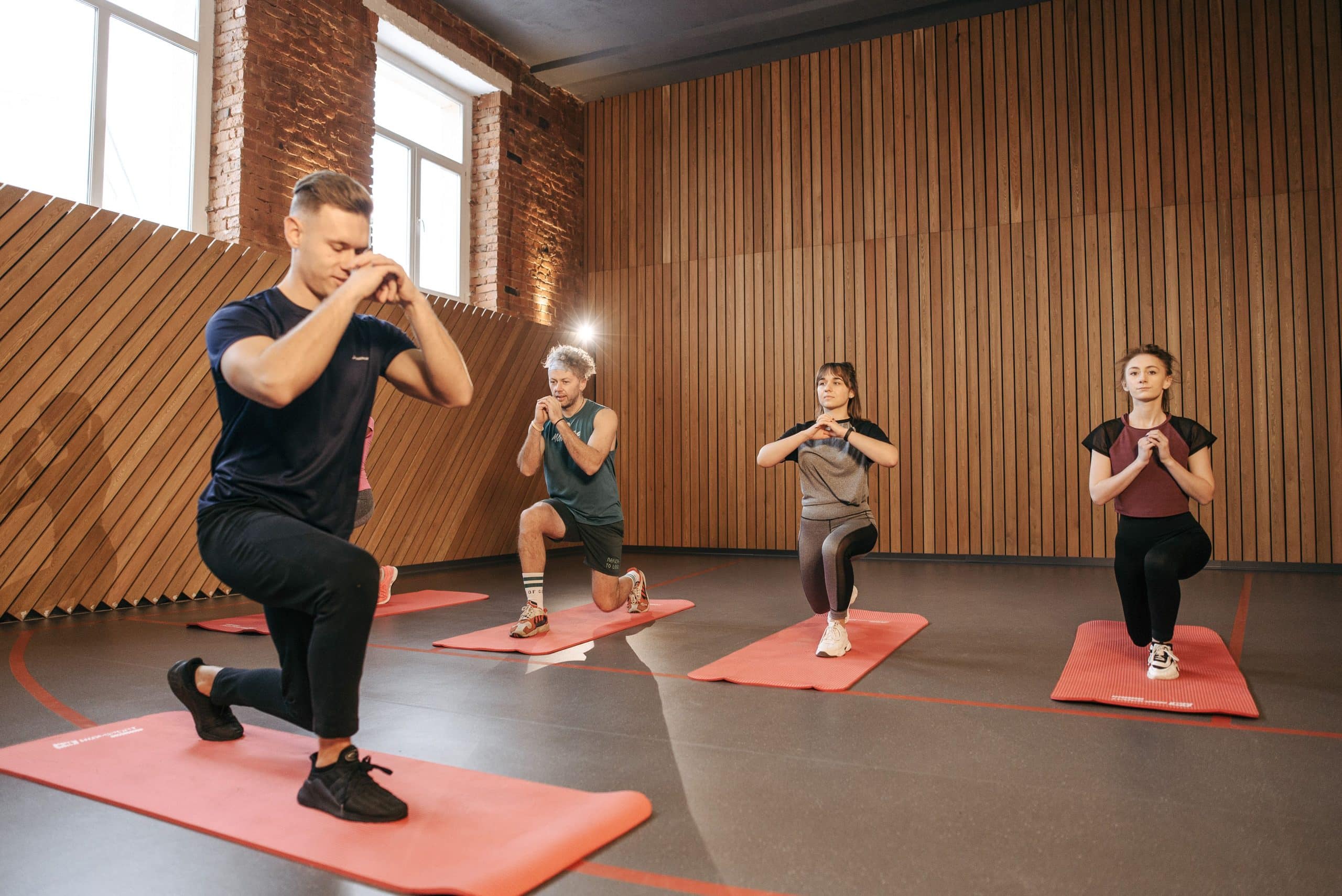
- Lunge / step (splitting your stance, like climbing stairs)
- Pull (drawing something toward you, like a row)
- Push (pressing away, like a push-up or overhead press)
- Squat (sitting down and standing up)
- Twist (rotating through the trunk)
Train these six well and you cover the movements your body is built to perform. Neglect one and a weak link shows up in your workouts and your daily life.
Why Train Patterns, Not Just Muscles
These six patterns train the whole body, and that is the point. There is a time and place to train in isolation, such as after surgery to restore strength and mobility in a specific muscle, but the body does not function in isolation in real life. You hinge, twist, and push as coordinated whole-body actions.
Training this way is also one of the best investments in a durable body. A large meta-analysis found that muscle-strengthening activities are associated with a 10 to 17 percent lower risk of early death, heart disease, diabetes, and cancer. And when it comes to staying injury-free, strength training more than halves the risk of sports injury. Loading the functional movement patterns is how you turn those findings into a resilient body.
Functional Movement Patterns in Everyday Life
You use these patterns not just in the gym but in ordinary activities. Take the squat. Getting up from a low chair is essentially a squat, and it needs more than your leg muscles. It requires adequate ankle mobility, knee and hip mobility, and a strong, stable core, which is a great example of the mobility vs stability balance in action.
By practicing the functional movement patterns like the squat, you develop the strength, stability, and motor control to move into a position, hold it, and come out of it without pain or struggle. That carryover is what makes the patterns worth training on purpose rather than hoping they take care of themselves. (If the squat is your sticking point, our guide on how to squat deeper breaks it down.)
How We Build Them: The 3R System
In our office, every exercise is intentional. We improve mobility in stiff muscles and locked-up joints so the body can move in bigger patterns, with less pain and better workouts. As mobility and motor control improve, we integrate and load whole patterns, using the deadlift for hinging, the goblet squat for squatting, and incline push-ups for pushing.
We follow a simple “3R” system to build each of the functional movement patterns:
- Reset with hands-on work or self-myofascial release to improve mobility and reduce pain.
- Reinforce the movement with specific drills (for example, a bridge to improve coming out of a squat).
- Reload so the pattern sticks (for example, a weighted goblet squat for the squat).
This reset-reinforce-reload sequence is what turns a temporary change into a durable one.
Relearning How to Move
Some people are naturally good movers, often those who grew up in movement arts like dance, gymnastics, or martial arts. Most preschoolers are excellent movers too; you never have to teach a toddler how to squat or hinge, because they simply do it well.
Over the years, though, the cumulative effects of sitting for most of the day and wearing restrictive footwear create stiffness and mobility limitations. Little by little, we stop expressing these patterns as well as we once did, and workouts and daily activities start to feel harder or achier than they should. This is exactly where an assessment from a qualified physical therapist can help pinpoint what has drifted and how to rebuild it.
Frequently Asked Questions
What are the six functional movement patterns?
The hinge, lunge or step, pull, push, squat, and twist. Together, these functional movement patterns cover the fundamental ways your body is designed to move in life and in training.
Are isolation exercises bad?
No. Isolation work has a real place, especially after an injury or surgery when you need to restore a specific muscle. It just should not be the whole plan, because daily life and sport demand coordinated, whole-body movement.
How do I know which pattern is my weak link?
Common clues are a pattern that feels stiff, unstable, or achy compared with the others, but the most reliable way is a movement assessment. It shows which of the functional movement patterns need mobility, which need stability, and in what order to train them.
Can I train these at home?
Yes. Bodyweight versions of each pattern (a sit-to-stand squat, a hip hinge, a step-up, a push-up, a row with a band, and a gentle trunk rotation) are a great start. Add load gradually as your control improves.
Move and Feel Better in Greenville, SC
If you are dealing with pain or your performance has stalled, a physical therapist with advanced training can identify your limitations, correct the dysfunction, and coach you through the functional movement patterns so you can reach your goals. The team at Movement Solutions in Greenville, SC helps active adults build a body that lasts. You can also explore our functional training program to put these patterns to work.
Want to talk it through first? Sign up for a free 15-minute phone consultation and we will point you in the right direction.
Medically reviewed by Dr. Tim Varghese, PT, DPT · Last updated September 1, 2026

Dr. Tim Varghese, PT, DPT
Dr. Tim Varghese, PT, DPT, is the founder of Movement Solutions Physical Therapy in Greenville, SC. He earned his Doctor of Physical Therapy from the Medical College of Georgia and is a Board-Certified Orthopedic Clinical…
More about Dr. Tim →