
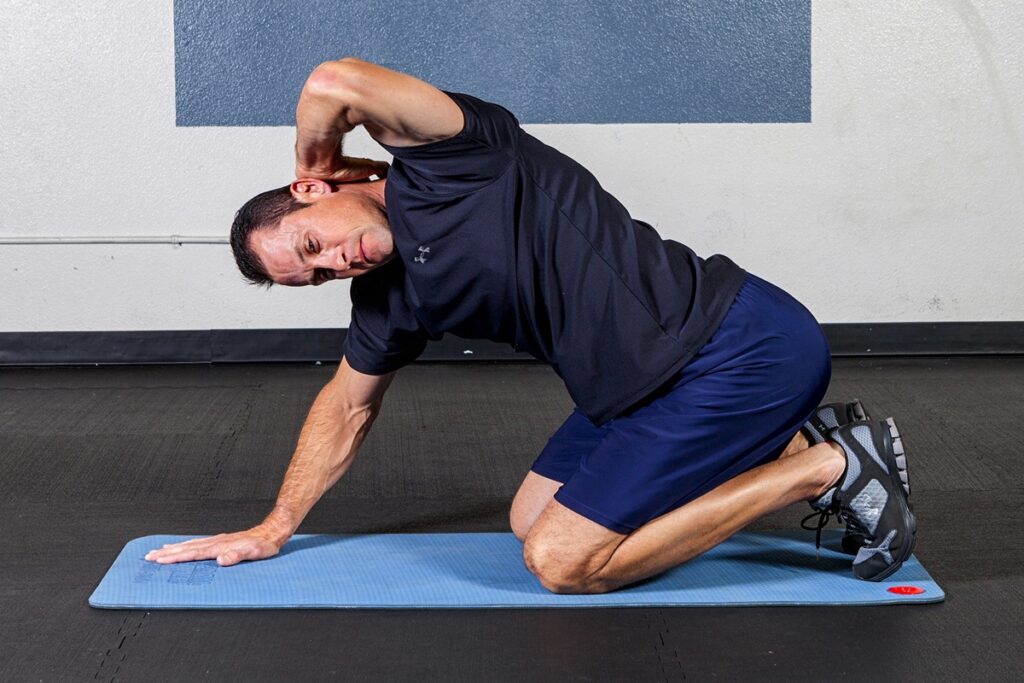
Improving t-spine mobility is one of the most overlooked keys to moving well, feeling good, and performing at your best. Good t-spine (thoracic) mobility is crucial for normal function and optimal performance, yet it is an area most people never think about until something starts to hurt.
What Is the T-Spine and Why Does It Matter?
The thoracic spine is the middle and upper part of your back. The thoracic vertebrae were designed to have a significant degree of inherent mobility. In a lumbar-lock position, normal thoracic rotation is at least 50 degrees in both directions.
However, the t-spine is also prone to stiffness as we adapt to modern lifestyles and imbalanced training routines. Hours at a desk, time on the phone, and repetitive one-sided movements gradually rob the thoracic spine of the rotation and extension it was built for. That is why improving t-spine mobility deserves a regular place in your routine.
How Poor T-Spine Mobility Affects You
In terms of daily function, t-spine mobility is needed any time you reach overhead or behind your back, whether you are putting away dishes, fastening a seatbelt, or reaching for a jacket.
With performance-oriented activities, movements like overhead pressing, lunging, step-ups, and running can all be affected by poor t-spine mobility. When the thoracic spine will not rotate or extend, your body borrows motion from joints above and below it that are not meant to move that way. The neck rotates more than it should, the low back twists excessively, and the shoulders shrug and compress the neck.
This is not just theory. In one study, people with rotator-cuff-related shoulder pain had significantly less thoracic rotation than pain-free individuals. It runs the other direction too: thoracic spine manipulation improves pain, range of motion, and function in people with mechanical neck pain. In the clinic, poor t-spine mobility routinely shows up as neck pain, shoulder pain, and low back pain from these compensations, which is why improving t-spine mobility often relieves symptoms that seem, at first glance, to have nothing to do with the mid-back. It is a common culprit behind neck pain from bench pressing, a squat barbell that hurts your neck, and infraspinatus and rotator-cuff shoulder pain.
Favorite Drills for Improving T-Spine Mobility
Here are a few of our go-to mobilization techniques and corrective exercises for improving t-spine mobility, in the order we usually coach them.
Step 1: Start With Bodywork
We always recommend beginning with some form of bodywork. That might be joint manipulation or soft-tissue release from a physical therapist or chiropractor, or self-mobilization with a foam roller. The goal is simple: prep the tissues so the spine is ready to move.
Step 2: Get the Spine Moving
Once the tissues are prepped, it is time to move. My first go-to drill is the thoracic rotation with rib grab. Perform it slowly and deliberately, exhaling as you rotate to reach a little further into your available range. If that one does not do much for you but you are still limited, try a quadruped or side-lying rotation variation that isolates the thoracic segments while keeping your lower back quiet.
Step 3: Lock In the New Range
A mobility drill that is not followed by a stability or motor-control activity is often ineffective. For new range to stick, you have to teach your body to actually use it. Pairing each drill with a controlled, active movement is what turns a temporary stretch into lasting change, and it is the step most people skip.
Who Benefits Most From T-Spine Mobility Work?
Almost everyone, but a few groups especially. Desk workers and anyone who spends hours on a phone or computer tend to lose thoracic extension and rotation over time. Lifters feel it in overhead pressing, cleans, and squats, where a stiff mid-back forces the shoulders and low back to compensate. Golfers, tennis players, and swimmers rely on thoracic rotation for power and a smooth, pain-free swing or stroke. And for active adults over 40, keeping t-spine mobility is one of the simplest ways to protect the neck, shoulders, and low back as posture naturally changes with age.
If you see yourself in any of those groups, a few minutes of t-spine mobility work several times a week is a small investment with an outsized payoff.
How to Tell If Your T-Spine Is Stiff
A few everyday signs hint that your thoracic spine could use attention: you struggle to reach overhead without arching your low back, you cannot rotate to check a blind spot without turning your whole torso, your upper back feels tight or achy after sitting, or you notice nagging neck and shoulder tension. None of these confirm a diagnosis on their own, but together they suggest that improving t-spine mobility would likely help. A movement assessment can confirm exactly where you are stiff and why.
Make It a Habit
If your t-spine is stiff, keep these movements in your regular routine. Consistency is everything when it comes to improving t-spine mobility. Stay with it and you should see slow, steady gains that carry over into less pain and better performance.
Because the t-spine influences so many joints, it pays to understand the areas it affects most. Explore our resources on neck pain, shoulder pain, and back pain to see how thoracic mobility ties into each.
Related Reading
- Squat Barbell Hurts Neck: Why It Happens and How to Fix It
- Neck Pain From Bench Press: Why It Happens and How to Fix It
- Infraspinatus Muscle Pain: Causes, Symptoms, and How to Find Relief
- Specialist for Shoulder Pain: Who to See First and When to Get Imaging
Frequently Asked Questions
How often should I do t-spine mobility drills?
Little and often wins. A few minutes most days, or at least three or four times a week, beats one long session. Because the thoracic spine stiffens up with daily sitting, brief, regular resets are what keep the gains from slipping away.
Can I improve t-spine mobility on my own at home?
Often, yes. Foam-roll bodywork plus a rotation drill and a follow-up control exercise can go a long way for a generally stiff mid-back. If pain is involved, or progress stalls, an assessment helps target what is actually holding you back.
How long until I notice a difference?
Many people feel looser within a couple of weeks of consistent work, with bigger carryover into posture, lifting, and less neck or shoulder tension building over a month or two of steady t-spine mobility practice.
Ready to Move Better?
Not sure where to start, or dealing with pain that will not quit? A physical therapist can assess your thoracic spine and build a plan tailored to you. Reach out to our team and take the first step toward moving, and feeling, better.
Medically reviewed by Dr. Tim Varghese, PT, DPT · Last updated August 21, 2026

Dr. Tim Varghese, PT, DPT
Dr. Tim Varghese, PT, DPT, is the founder of Movement Solutions Physical Therapy in Greenville, SC. He earned his Doctor of Physical Therapy from the Medical College of Georgia and is a Board-Certified Orthopedic Clinical…
More about Dr. Tim →