
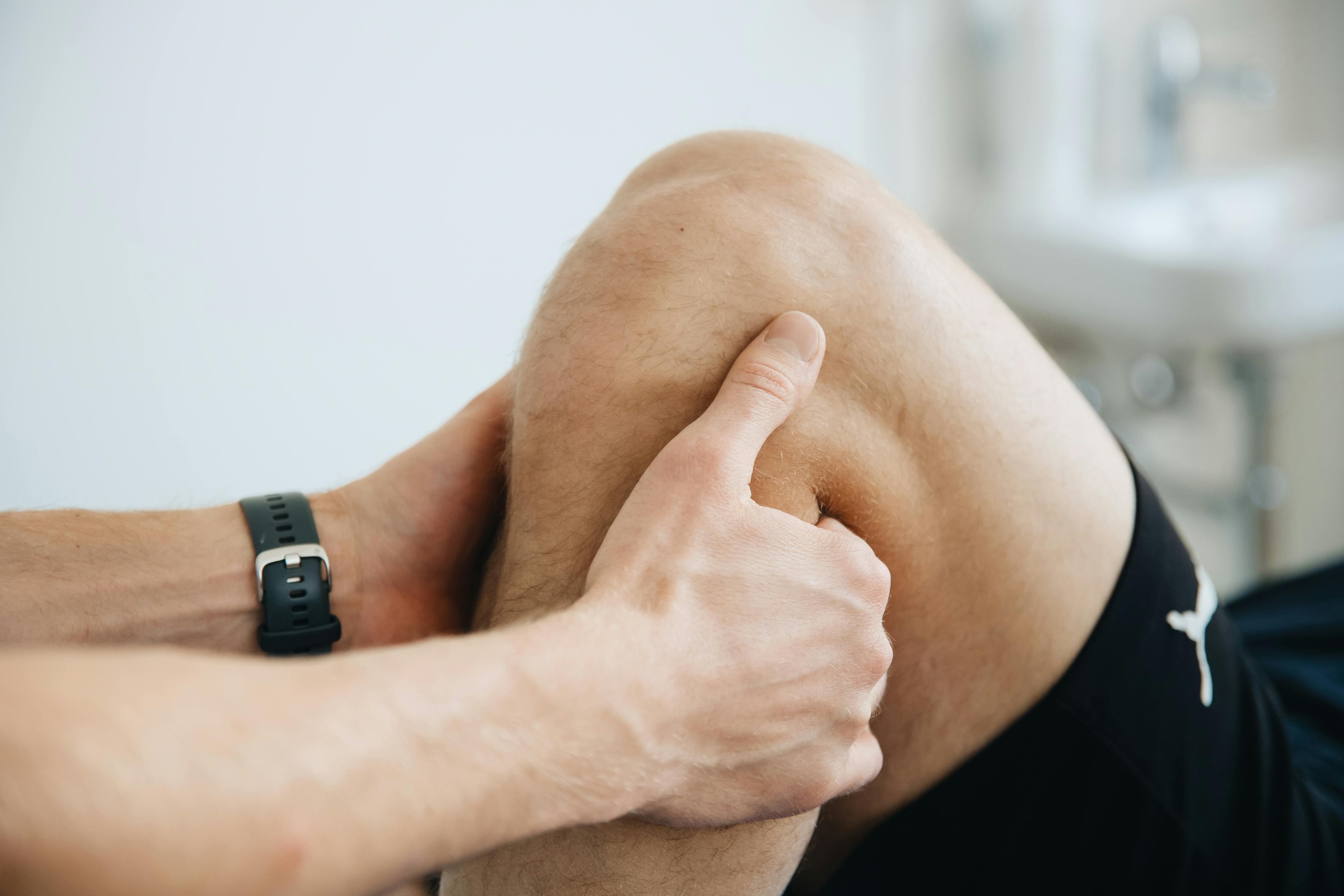
When your knee starts acting up, it can really slow you down. Maybe you notice stiffness after a hike, or a sharp twinge when you climb stairs. You want to keep moving, keep up with your workouts or weekend plans, but that nagging ache is holding you back. You’re not alone: this is common for active adults in Greenville, SC, and the right physical therapy techniques for knee pain can help you feel better and move with confidence again.
If it isn’t improving, a physical therapy evaluation can pinpoint what’s driving it and build a plan tailored to your specific knee. Early intervention addresses musculoskeletal issues promptly and effectively. If you’re unsure what’s safe, especially after a recent injury, surgery, or if swelling is increasing, start with guidance from a physical therapist.
Understanding Your Knee Pain
Your knee works as a hinge joint connecting the thigh bone (femur) to the shin bone (tibia), supported by muscles like the quadriceps and hamstrings and cushioned by cartilage. Knee pain often comes from irritation or strain of the muscles, tendons, or ligaments around the joint rather than a severe injury like a fracture. Many cases are manageable, though some are more complex and need a professional evaluation.
Common contributors include muscle imbalances, overuse, poor movement patterns, tight calf or hamstring muscles, previous injuries, and daily habits. These place uneven stress on the joint, leading to pain, stiffness, and reduced stability. Targeting those root causes is exactly what the best physical therapy techniques for knee pain are designed to do.
Safe First Steps You Can Do at Home
You can begin many physical therapy techniques for knee pain at home. Pick activities that keep pain at a manageable level during and after. A useful rule is no sharp pain, and symptoms should settle back down within 24 hours. Start with a short warm-up (5 to 10 minutes of walking or biking), then choose a few movements and do them consistently. If swelling is increasing, reduce impact and volume for a few days, then build back gradually.
The 6 Proven Moves: Your At-Home Knee Routine
These six exercises form the core of the physical therapy techniques for knee pain we start most people with. Aim for 2 sets each, several times per week.
- Straight leg raise (8–12 each side). Lie on a mat with one leg straight and the other foot anchored. Engage your abdominals to stabilize your pelvis, slowly lift the straight leg, then lower it with control.
- Glute bridge (8–12). Lie on your back, feet flat, and drive through your heels to lift your hips. This strengthens the glutes and hamstrings that support the knee.
- Sit-to-stand (6–10). From a chair, stand and sit slowly, keeping the knee tracking over your mid-foot to build stability.
- Step-up (6–10 each side). Use a low step, stand tall with good posture, and control the lowering phase to strengthen the muscles around the knee.
- Heel and calf raise (8–12). Feet hip-width apart, rise onto your toes and lower slowly to build the calf strength that supports knee stability.
- Prone straight leg raise (8–12 each side). Lie on your stomach, legs straight, lift one leg by squeezing the glute, then lower with control.
Apply ice after activity if you feel soreness or inflammation. Cold therapy reduces inflammation, while heat can help relax muscles before exercise.
How We Progress Your Plan
Physical therapy techniques for knee pain typically advance through structured phases. The initial focus is rebuilding strength in the key muscle groups that support the knee—quadriceps, hamstrings, gluteus medius, and calves. Alongside that, mobility work addresses flexibility limits to restore range of motion.
As strength and mobility improve, control and balance training retrains neuromuscular awareness and proprioception around the joint. Functional movements are then introduced to rebuild confidence in daily activities and sport, and conditioning supports overall fitness while minimizing knee stress. Throughout, the best physical therapy techniques for knee pain are individualized to your response and goals rather than applied as a one-size-fits-all routine.
What to Expect and How Long It Takes
Some people notice progress within a few weeks of applying these physical therapy techniques for knee pain. Bigger strength and capacity changes often take 8 to 12 weeks, depending on your starting point and activity demands. Early wins usually include less pain during daily activities and better range of motion, while strength and stability gains build with consistent effort. Tracking simple measures, such as pain levels, walking distance, or stair climbing, helps keep you motivated.
Common Questions About Physical Therapy Techniques for Knee Pain
Will physical therapy hurt my knee?
Good therapy shouldn’t cause sharp pain. You might feel some muscle soreness as you strengthen, but sharp or worsening pain means you should tell your therapist.
Can I do these exercises on my own?
Yes, but it’s best to start the physical therapy techniques for knee pain under professional guidance so you’re doing the right movements with proper form.
How often should I do knee exercises?
Usually 3 to 5 times a week, but your therapist will tailor this to your condition.
What if my knee swells or feels hot?
Mild swelling or soreness after activity can be managed with rest, ice, and reduced load for a few days. If your knee is hot, very red, or you have a fever or severe worsening symptoms, seek medical attention urgently.
When should I see a PT or doctor sooner?
Get checked sooner if you cannot put weight on the leg after an injury, your knee “locks” and won’t fully bend or straighten, you notice rapid swelling after a twist or fall, or the knee is hot, very red, and you feel feverish. With calf swelling or sudden shortness of breath, seek urgent care.
Can physical therapy techniques for knee pain prevent knee surgery?
Sometimes, yes. Strengthening and improving movement can reduce symptoms and delay or avoid surgery, though it depends on the specific issue.
Is it normal for knee pain to come and go?
Yes, especially if you increase activity too quickly. Consistent physical therapy techniques for knee pain, paired with exercise and movement work, help reduce flare-ups over time.
Mistakes That Slow Knee Recovery
Even the best physical therapy techniques for knee pain fall flat when a few common mistakes get in the way. The first is doing too much too soon, like chasing heavy squats or long runs before the surrounding muscles are ready, which keeps the joint irritated. The second is complete rest: shutting movement down entirely tends to leave the knee stiffer and weaker, not better. The third is skipping the boring-but-important strength work for the hips and calves, which quietly control how load travels through the knee.
Consistency beats intensity here. A short routine done four to five days a week almost always outperforms an occasional hard session, and it lets you spot flare-ups early instead of training through them. If pain keeps returning despite steady effort, that’s your cue to have a physical therapist reassess the plan.
Ready to Take the Next Step?
If knee pain is getting in the way of your life in Greenville, SC, a physical therapist can help you build a plan around these physical therapy techniques for knee pain so you move better and feel stronger. You don’t have to just “live with it.” Reach out to schedule an evaluation or ask any questions. We’re here to help you get back to the activities you love with confidence and care.
Medically reviewed by Dr. Tim Varghese, PT, DPT · Last updated September 25, 2026

Dr. Tim Varghese, PT, DPT
Dr. Tim Varghese, PT, DPT, is the founder of Movement Solutions Physical Therapy in Greenville, SC. He earned his Doctor of Physical Therapy from the Medical College of Georgia and is a Board-Certified Orthopedic Clinical…
More about Dr. Tim →