
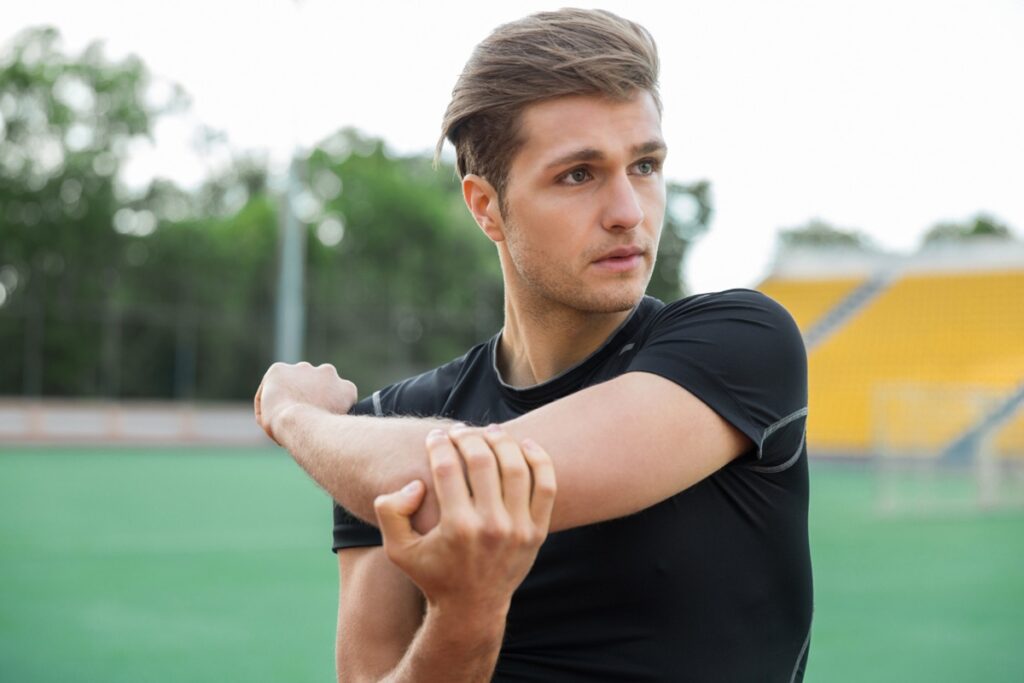
If nagging elbow pain is making it hard to grip, lift, or type, the good news is that most cases respond very well to the right plan. Whether it is tennis elbow, golfer’s elbow, or a general ache from repetitive activity, learning how to fix elbow pain comes down to calming the irritated tendon and then addressing why it got overloaded in the first place. Here are four simple steps to get there.
Step 1: Understand What’s Actually Hurting
At the elbow, the most common sites for tendon pain are the bony bumps on the inside and outside. Clinically these are called “medial epicondylalgia” and “lateral epicondylalgia.” In plain English, they are known as golfer’s elbow (inside) and tennis elbow (outside). Despite the names, they show up with almost any repetitive activity, from weightlifting and typing to manual labor, and the pain involves irritation of the wrist flexor or extensor tendons where they anchor at the elbow.
These conditions usually build up over time, and knowing how to fix elbow pain means looking beyond the sore spot. Contributing factors include stiffness of the wrist joints and muscles, compensation for a weak shoulder girdle, and plain old repetitive strain. It affects athletes and desk jockeys alike. Movements that tend to hurt include squeezing and holding objects, lifting, carrying, and typing.
Step 2: Calm the Flare, But Don’t Stop There
In our office, the first thing we usually recommend is a short break from the aggravating activity. That gives the irritation a chance to settle and the tendon a chance to heal. Rest almost always eases the pain, so it is a reasonable first move in how to fix elbow pain.
Here is the catch: rest alone rarely solves it. As soon as you return to the activity you love, the pain often returns too, because the underlying cause was never addressed. This is also why chasing a quick cortisone shot can backfire. A landmark trial found that corticosteroid injection gave short-term relief but led to worse outcomes at one year than physiotherapy for tennis elbow. The lasting fix is to find and correct what overloaded the tendon.
Step 3: Treat the Root Cause, Not Just the Elbow
The elbow is often the victim, not the culprit. In many cases, elbow tendinitis is tied to stiffness of the wrist, which can combine with weakness of the rotator cuff and lat muscles. Some evidence even points to a neck (cervical spine) component. Lifestyle factors matter too: is your workstation set up for good ergonomics, and is your lifting or swinging technique sound? Suboptimal mechanics and faulty movement patterns can cause an athlete to place excessive strain on the elbow tendons.
The only way to know what is driving your pain is a complete assessment that looks at how someone actually moves, from the wrist all the way up to the neck. When we find pain and stiffness, our approach includes manual mobilization to ease pain and improve mobility, and we have found that dry needling can work wonders for elbow pain. Hands-on therapy to the neck has also shown positive results. When the right regions are targeted, improvements often come quickly, which is a big part of how to fix elbow pain for good rather than just quieting it for a week. Because the wrist is so often involved, our wrist tendonitis guide is a useful companion read.
Step 4: Rebuild Strength and Stability
Once pain is under control and the right muscles are firing, the final step in how to fix elbow pain is building tolerance back into the tissue. If weakness is present, we start with activation drills so your body better engages muscles that were not pulling their weight. From there, we progress to developing stability and strength of the wrist and shoulder girdle under load.
This progressive loading is what makes the fix stick. Expert guidance reflects this: management of lateral elbow tendinopathy works best when it is individualized and built around progressive loading rather than a one-size-fits-all recipe. Strengthening the whole chain, including the shoulder, is what lets the elbow handle your sport, job, and hobbies without flaring up again. This is where how to fix elbow pain quietly becomes how to keep it fixed.
Frequently Asked Questions
How long does elbow tendinitis take to heal?
Tennis and golfer’s elbow are often self-limiting but slow, sometimes lingering for many months if the cause is not addressed. With a targeted plan that combines calming the tendon and rebuilding strength, many people turn the corner much faster, though the exact timeline depends on how long it has been going on and what is driving it. Part of how to fix elbow pain is staying patient with the loading plan even after the pain eases.
Should I get a cortisone shot?
It can help in the short term, but the evidence suggests caution: injections tend to do worse than physiotherapy at one year for tennis elbow. For most people, a load-based rehab plan is the better long-term route, and part of learning how to fix elbow pain is resisting the quick-fix that sets you back later.
Can I keep exercising with elbow pain?
Often yes, with modifications. The goal is to reduce the aggravating load temporarily, not to shut down entirely. A good assessment shows which movements to scale back and which to keep, so you stay active while the tendon settles, which is a smarter path to how to fix elbow pain than resting completely.
Is it tennis elbow or golfer’s elbow?
Tennis elbow is pain on the outside of the elbow, golfer’s elbow on the inside. Both are tendon overload problems and both respond to the same overall approach, so the fix for how to fix elbow pain looks similar for each.
Get Elbow Relief in Greenville, SC
When it is addressed with a thorough assessment and a real plan, elbow tendinitis can resolve relatively quickly. Ignore it and push through repetitive activity with poor mechanics, though, and it can become a more stubborn problem. If you feel like you may be developing an elbow problem, the physical therapists at Movement Solutions in Greenville, SC would be glad to assess it and show you how to fix elbow pain for your specific case.
We offer a free 15-minute phone consultation to talk through how your elbow is affecting you and your options. Call us at (864) 558-7346 and ask how we can help.
Medically reviewed by Dr. Tim Varghese, PT, DPT · Last updated August 21, 2026

Dr. Tim Varghese, PT, DPT
Dr. Tim Varghese, PT, DPT, is the founder of Movement Solutions Physical Therapy in Greenville, SC. He earned his Doctor of Physical Therapy from the Medical College of Georgia and is a Board-Certified Orthopedic Clinical…
More about Dr. Tim →