
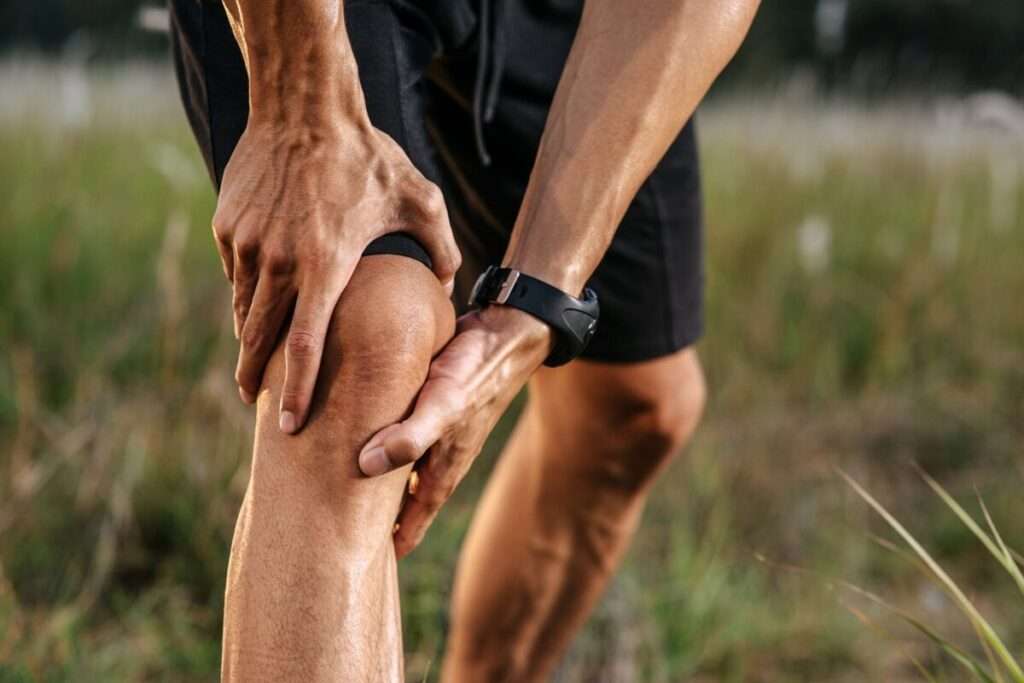
Patellar tendonitis is pain in the tendon that connects your kneecap (patella) to your shinbone, and it can quietly derail training if you let it linger. The patellar tendon works with the muscles at the front of your thigh to extend your knee so you can squat, walk, and go up and down steps. When that tendon gets irritated, everyday movement starts to hurt. The good news is that patellar tendonitis responds very well to the right plan, and this guide walks you through five simple steps to lasting relief.
Table of Contents
ToggleWhat Is Patellar Tendonitis?
Patellar tendonitis, also called patellar tendinopathy or “jumper’s knee,” is an overuse irritation of the patellar tendon just below the kneecap. It usually develops gradually rather than from a single injury. Because the tendon handles a lot of load every time you bend and straighten your knee, repetitive stress and training errors are the main drivers. It is a common condition in active people who enjoy weightlifting, hiking, group exercise, jogging, biking, tennis, or pickleball.
Symptoms and Common Causes
The hallmark of patellar tendonitis is pain right below the kneecap that flares with loading. Movements that commonly hurt include running, walking, stairs, squats, and lunges. Many people also notice stiffness first thing in the morning or after a long stretch of sitting.
So what causes it? A movement assessment is the best way to know for sure, but the usual contributors are consistent:
- Insufficient strength in the trunk, thighs, hips, lower leg, and foot.
- Sudden spikes in training volume or intensity.
- Movement errors such as a “knock-knee” position during squats and lunges.
- Inadequate tensioning of the leg muscles under load.
Understanding which of these applies to you is the first real step toward fixing patellar tendonitis instead of just quieting it for a day or two.
5 Steps to Overcome Patellar Tendonitis
Resolving patellar tendonitis follows a clear progression. Rushing it tends to backfire, so move through these steps in order.
Step 1: Calm the Pain
Start by taking a short break from the specific activity that is aggravating the knee. This lets the pain and irritation settle. If symptoms persist, hands-on therapy to the thigh, calf, and kneecap can be effective for easing acute patellar tendon pain. This is about creating a window to rebuild, not resting forever.
Step 2: Reactivate Weak Muscles
Once pain is calmer, retrain the muscles that are not firing well. Reliable beginner exercises include quad sets, gluteal bridges, and hip hurdles. Waking these muscles up gives the tendon the support it has been missing.
Step 3: Restore Knee Motion
The basic jobs of the knee are to bend and extend fully. Folding at the knees with an assisted pole squat and extending fully with a banded terminal knee extension helps restore normal knee mechanics, so the tendon is loaded evenly rather than in one cranky spot.
Step 4: Rebuild Strength
Now build real capacity. Learn to create tension through the trunk, hips, thighs, lower leg, and foot while performing compound movements like the squat, lunge, step-up, and deadlift. This matters because progressive tendon-loading exercise is one of the most effective treatments for patellar tendinopathy. A tendon gets more resilient when you load it well, not when you avoid it.
Step 5: Manage Load and Return Gradually
Because patellar tendonitis is an overuse problem, how you ramp back up decides whether it stays gone. Add volume and intensity gradually, respect your symptoms, and avoid sudden jumps in training. A simple guide many clinicians use is the 24-hour rule: if pain settles back to your baseline within a day of a workout, the load was acceptable. If it flares and stays elevated the next morning, you pushed too hard and should scale back. Many of the exercises above can be found in our video library so you can practice with confidence.
How Long Does Patellar Tendonitis Take to Heal?
It depends on how long the tendon has been irritated and how much of the underlying weakness you address. Many people feel meaningfully better within a few weeks of consistent loading, though rebuilding a durable tendon often takes a couple of months. Tendons adapt slowly because they have a limited blood supply, so patience and steady, progressive effort tend to win out over aggressive short-term fixes. Consistency over several weeks matters far more than intensity on any single day. Ignoring the pain and pushing through repetitive activity, on the other hand, can turn a manageable case of patellar tendonitis into a more stubborn knee problem.
Frequently Asked Questions
Should I keep exercising with a sore tendon?
Usually yes, with modifications. Complete rest tends to leave the tendon weaker and no less painful. The better approach is to reduce the aggravating load, keep training in a pain-tolerable range, and progressively rebuild strength.
Is it the same as patellar tendinopathy?
They describe the same area of pain. “Tendonitis” implies active inflammation, while “tendinopathy” reflects the more accurate understanding that the tendon is degenerated and overloaded rather than simply inflamed. Either way, the loading-based plan above is the fix.
Will it go away on its own?
Sometimes symptoms quiet down with rest, but they usually return once you resume activity if the underlying weakness and load errors are not addressed. Building strength and managing load is what makes relief last.
Get Lasting Relief in Greenville, SC
When addressed with a physical therapy program that uses a whole-body approach, overcoming patellar tendonitis is absolutely possible. If you have concerns about knee pain, the physical therapists at Movement Solutions in Greenville, SC would be glad to help. We also offer a free knee pain guide to give you more insight and help kickstart your recovery.
If you would like help, you can request a knee consultation with one of our specialists. It is a chance to ask questions, get clarity about your knee pain, and build confidence that we can help.
If you are in pain but unsure what to do, call us at (864) 558-7346 and ask how we can help.
Medically reviewed by Dr. Tim Varghese, PT, DPT · Last updated August 14, 2026

Dr. Tim Varghese, PT, DPT
Dr. Tim Varghese, PT, DPT, is the founder of Movement Solutions Physical Therapy in Greenville, SC. He earned his Doctor of Physical Therapy from the Medical College of Georgia and is a Board-Certified Orthopedic Clinical…
More about Dr. Tim →