
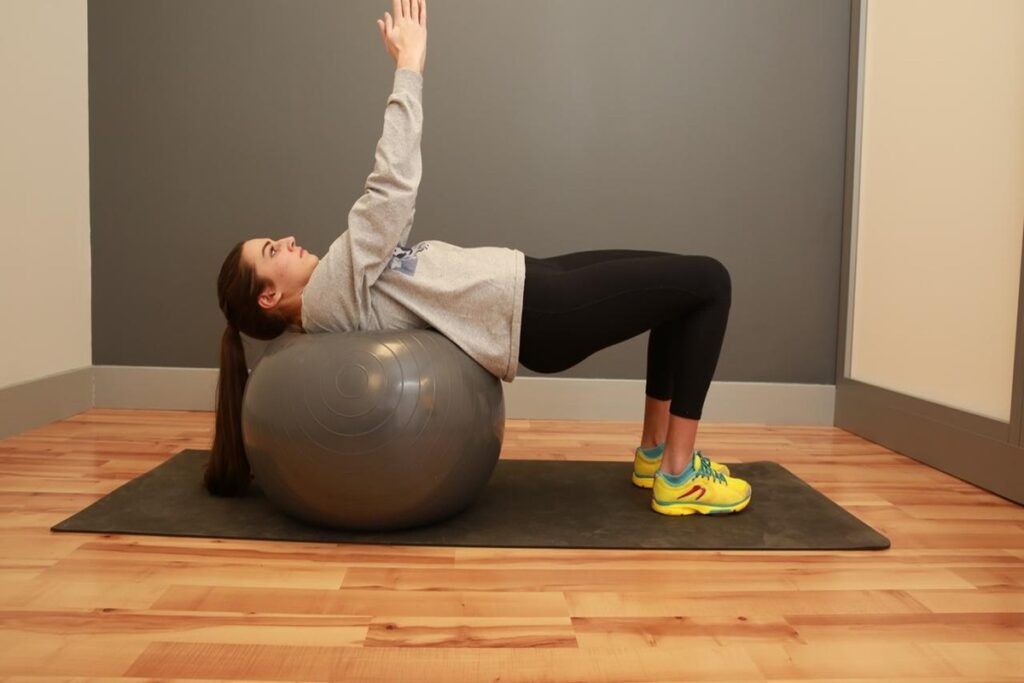
When it comes to moving well and staying pain-free, the mobility vs stability question is one of the most useful things you can understand about your own body. Moving and staying active is essential for keeping your body healthy. Without a regular movement practice, joints stiffen, muscles weaken, and everyday life gets harder. Both mobility and stability are equally important, and knowing the difference (and how they work together) is the key to moving better for years to come. Here are four simple keys to the mobility vs stability balance.
Here’s the difference between mobility and stability, and why you usually need both:
| Mobility | Stability | |
|---|---|---|
| What it is | The ability to move through a full range of motion | The ability to control and stay strong through that full range |
| Why it matters | Without it, movement feels stiff and restricted | Without it, a flexible joint still lacks control |
Key 1: What Mobility Is
Mobility is the ability to move your body through full ranges of motion. As a result of aging and our sedentary lifestyles, we tend to lose mobility in a few key areas: the hips, the thoracic spine (upper back), and the ankles. These three regions are the intersections where good mobility is needed for the activities of daily life and performance.
When you lack mobility in these areas, your movement quality declines, and poor movement predisposes your joints to excessive wear and tear. This is not just theory: limited hip range of motion, particularly hip internal rotation, is associated with nonspecific low back pain. The good news is that targeted work helps. If mobility is your limiter, start with our guides on hip mobility, ankle mobility, and t-spine mobility. Understanding this side is the first step in the mobility vs stability picture.
Key 2: What Stability Is
Stability is the ability to maintain control and strength through a full range of motion, and it is every bit as important as mobility. If you have great range but cannot control your movement through it, you end up placing a lot of stress on your joints. The regions where people most often lack control and strength are the hips, the abdominals and core, and the shoulders.
This is the half of mobility vs stability that people tend to neglect. Building control pays off: research on balance and neuromuscular-control training shows it improves postural control and coordination, the very qualities that protect a joint under load. If control is your gap, our guides on shoulder mobility and stability and how to strengthen your knees show how to build strength through range.
Key 3: Why Mobility and Stability Are Tied Together
Here is where the mobility vs stability distinction gets interesting: the two are rarely separate problems. A muscle can become stiff in the presence of instability, because your body will sometimes create stability through stiffness when it cannot find real control. A muscle can also feel tight because it is compensating for weakness somewhere else. Your stiff quads and hip flexors, for example, may feel that way because of weakness in your posterior chain (the glutes and hamstrings).
That overlap is why chasing only one side often fails. Foam rolling a “tight” muscle that is actually bracing for a weak neighbor will not hold, and strengthening without addressing a genuine range restriction leaves you controlling a motion you cannot fully access. The combination of poor mobility and poor stability is what quietly drives faulty movement patterns, wear and tear, and pain in different regions of the body. Seeing mobility vs stability as a partnership, not a competition, is what unlocks lasting change. The lower crossed syndrome and upper crossed syndrome patterns are classic examples of this tug-of-war.
Key 4: How to Find Your Balance
So how do you know which one you need more of? That is exactly the question a good movement assessment answers. Rather than guessing, a provider can test each region and tell you where you need more mobility, more stability, or both, and in what order to build them. This is the practical payoff of the mobility vs stability framework: it turns a vague “I feel tight” into a specific plan.
For most active adults, the honest answer is that you need some of both, in the right places. Your hips might need mobility while your core needs stability; your ankles might need range while your shoulders need control. Getting the mobility vs stability mix right for your body is what keeps you moving well and feeling strong, which is why an individualized approach beats a generic routine every time.
A simple way to put it into practice is to test, address, and retest. Pick a movement that feels limited or unstable, work the mobility or stability drill that seems to fit, then repeat the movement to see if it improved. If it did, you found the right lever. If it did not, the restriction is likely coming from somewhere else in the chain, and that is your cue to look up or down the body rather than pushing harder on the same spot.
Frequently Asked Questions
Is mobility or stability more important?
Neither wins the mobility vs stability debate on its own. They are equally important and deeply connected. Full range of motion is only useful if you can control it, and control is only useful if you have the range to move through in the first place.
Can too much mobility be a problem?
Yes. Range without control can actually increase stress on a joint, which is why hypermobile people often need to prioritize stability. This is a good example of why the mobility vs stability answer is individual, not one-size-fits-all.
How do I know which one I need?
The most reliable way is a movement assessment. Common clues include feeling stiff and restricted (a possible mobility issue) versus feeling loose but shaky or achy under load (a possible stability issue), but the two often overlap, so testing beats guessing.
Should I stretch or strengthen?
Often both, in a specific order for your body. Stretching and soft-tissue work open up range, and strengthening teaches you to own it. Pairing them is what makes gains last.
Move and Feel Better in Greenville, SC
Finding a good movement provider can help you sort out your own mobility vs stability needs and get you back on track to feeling great, moving well, and unlocking your potential. The providers at Movement Solutions in Greenville, SC have advanced training to pinpoint exactly where you need more mobility, more stability, or both, so you can get back to an active lifestyle.
If you are unsure where to start, call us at (864) 558-7346 and ask how we can help.
Medically reviewed by Dr. Tim Varghese, PT, DPT · Last updated September 25, 2026

Dr. Tim Varghese, PT, DPT
Dr. Tim Varghese, PT, DPT, is the founder of Movement Solutions Physical Therapy in Greenville, SC. He earned his Doctor of Physical Therapy from the Medical College of Georgia and is a Board-Certified Orthopedic Clinical…
More about Dr. Tim →