
If you want to move well and stay pain-free, learning how to improve hip mobility is one of the highest-return things you can do. Mobile, strong hips are the foundation of nearly every athletic and everyday movement. The hip moves in six directions, and a loss of mobility or stability in any of them forces the rest of your body to compensate. Below are five painless drills to improve hip mobility, plus why it matters and how to make it stick.
Why Hip Mobility Matters
It is hard to keep good technique for squatting, deadlifting, lunging, or any athletic activity without adequate hip function. When the hips do not move well, the spine and the knees usually pay the price through compensations, and over time that can mean extra wear at the hips or the joints above and below them.
This is well documented. Limited hip range of motion, particularly hip internal rotation, is associated with nonspecific low back pain, and abnormal hip mechanics are a recognized contributor to knee injury. In other words, when you improve hip mobility, you are not just helping the hip; you are protecting the back and knees too.
Why Hips Get Stiff
Chronic sitting at work and school has predisposed many of us to hip stiffness, quietly inhibiting the glutes and adaptively shortening the hip flexors and hamstrings. The good news is there is a lot you can do about it. A little consistent work to improve hip mobility goes a long way toward waking up those muscles and restoring the motion your hips were built for.
5 Painless Drills to Improve Hip Mobility
Here are our go-to drills to improve hip mobility, grouped from tissue prep to active control. Work through the ones that feel most limited, and keep them in your routine.
1. Foam Roll the Hips and Thighs
Start by using a foam roller to reduce stiffness through the hip and thigh muscles. This preps the tissues so the joint is ready to move. A few effective ways to roll out the hips and surrounding muscles are shown below.
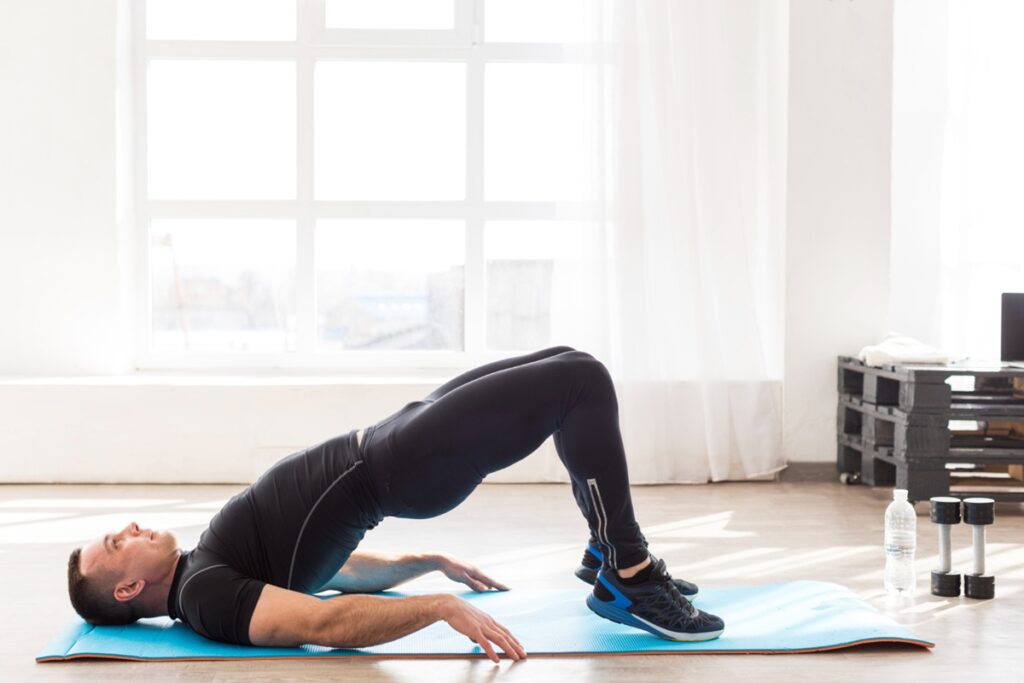
2. Bridge Variations
Bridge variations are great for activating the glutes and taking the hip flexors through a full range of motion. They pair a mobility benefit with the muscle activation that helps the new range stick.
3. Leg Lowering and the Active Straight-Leg Raise
Leg lowering and the active straight-leg raise with core activation train the nervous system to coordinate the hips with the core, and they help normalize stiffness through the posterior-chain muscles.
4. Banded Hip Mobilizations
Using a mini-band with a moderate amount of resistance and pulling the hips through a full range of motion can normalize stiffness through the hip flexors while taking the glutes through their full range.
5. Pigeon Pose for External Rotation
The yoga pigeon pose is effective at opening the hips into external rotation. A contract-relax technique works especially well here to gently expand your range.
Who Benefits Most From Better Hip Mobility?
Almost everyone, but especially desk workers who sit for hours, lifters who squat, hinge, and lunge, runners and court-sport athletes, and active adults over 40 who want to protect their backs and knees. If your hips feel tight, your squat depth is limited, or your low back nags after sitting, a few minutes of this work several times a week can make a real difference. The best way to improve hip mobility for your specific limitations is to have a movement assessment, which pinpoints exactly which direction is restricted and why.
Signs Your Hips Could Use Work
A few everyday clues suggest it is time to improve hip mobility: you cannot squat to a comfortable depth without your low back rounding, your knees cave inward on squats or lunges, your hip flexors feel tight after sitting, or you notice nagging low-back or knee tension after activity. None of these confirm a problem on their own, but together they point to hips that are not moving the way they should. The reassuring part is that these are exactly the patterns that respond well when you improve hip mobility with consistent, targeted work.
Make It a Habit
If your hips are not as mobile as they should be, try a few of these drills and keep the ones that help in your routine. Consistency is what turns a temporary stretch into lasting change, so short, regular sessions beat the occasional long one. Pair each mobility drill with a controlled, active movement so your body learns to use the range you gain. Think of it as a small daily deposit that pays off in easier squats, longer walks, and a back and knees that feel better for it.
Frequently Asked Questions
How often should I do hip mobility drills?
Most people do well with a few minutes most days, or at least three or four times a week. Because sitting stiffens the hips daily, brief and frequent resets keep your gains from slipping away.
How long until I notice a difference?
Many people feel looser within a couple of weeks of consistent work, with bigger carryover into squatting, walking, and less back or knee strain over a month or two of steady practice.
Can tight hips really cause back or knee pain?
They can. When the hips do not move well, the spine and knees compensate and absorb load they are not designed for. That is exactly why efforts to improve hip mobility often ease symptoms that seem unrelated to the hip itself.
Move Better in Greenville, SC
If stiff hips are holding you back, a physical therapist can assess your hips and build a plan tailored to you. The team at Movement Solutions in Greenville, SC helps active adults move and feel their best. You can also explore our related guides on ankle mobility and t-spine mobility to round out your routine.
If you are unsure where to start, call us at (864) 558-7346 and ask how we can help.
Medically reviewed by Dr. Tim Varghese, PT, DPT · Last updated August 21, 2026

Dr. Tim Varghese, PT, DPT
Dr. Tim Varghese, PT, DPT, is the founder of Movement Solutions Physical Therapy in Greenville, SC. He earned his Doctor of Physical Therapy from the Medical College of Georgia and is a Board-Certified Orthopedic Clinical…
More about Dr. Tim →