
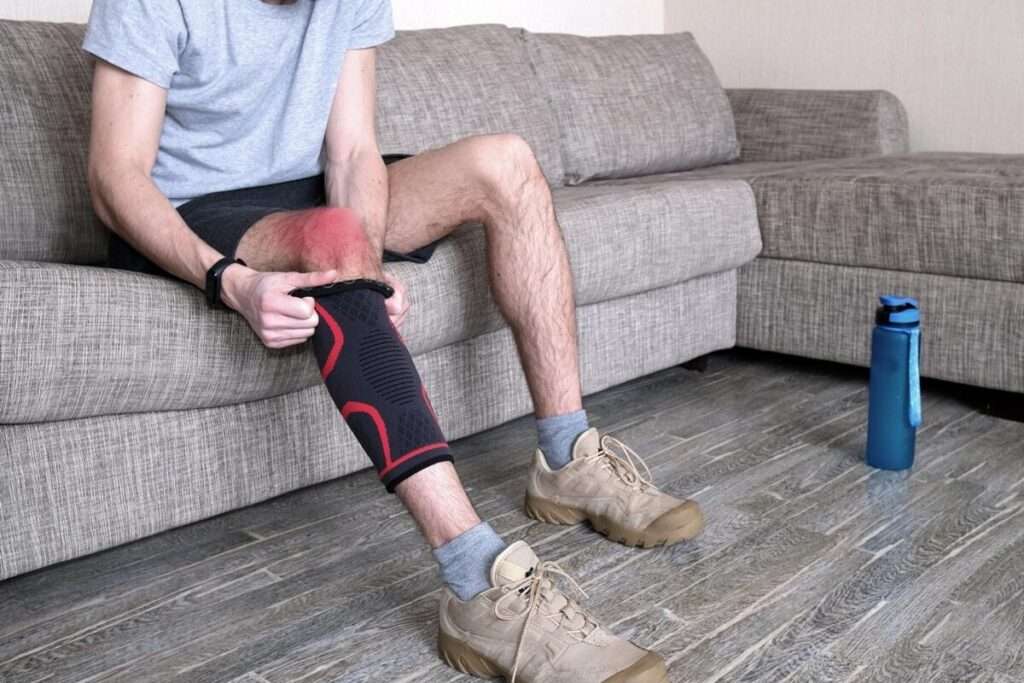
The right runner’s knee exercises can calm that nagging ache at the front of your knee and strengthen the muscles that keep your kneecap tracking smoothly. “Runner’s knee” is the common name for patellofemoral pain syndrome (PFPS), pain in and around the kneecap, and despite the name you do not have to be a runner to get it. Below are six effective runner’s knee exercises, plus what actually causes it and how long relief takes.
What Is Runner’s Knee (PFPS)?
Patellofemoral pain syndrome refers to pain at the front of the knee, in and around the kneecap (patella). It is one of the most common types of knee pain, accounting for roughly 20% to 25% of all reported knee pain and affecting more women than men. Pain shows up when friction builds between the underside of the kneecap and the thigh bone, often with tenderness along the edges of the kneecap.
Research describes PFPS as an “overuse syndrome,” meaning it usually comes from repetitive load on the knee. We see it in runners, cyclists, CrossFit and functional-fitness fans, active teens, and older adults alike. Symptoms typically flare with running, walking, stairs, squats, and lunges, and often feel worse first thing in the morning or after long periods of sitting.
What Causes Runner’s Knee?
A few overlapping factors drive most cases. The lower leg may not line up well through the hip, knee, and foot, so the kneecap tracks poorly in its groove. Runner’s knee is also frequently coupled with limited hip and ankle mobility, plus weakness in the hip, thigh, and glute muscles. When the core and hips are weak or imbalanced, you compensate as you walk, squat, run, or lunge, and the kneecap takes the extra stress. That is why the best runner’s knee exercises target the hips and thighs, not just the knee. A movement assessment is the best way to pinpoint your specific drivers.
6 Runner’s Knee Exercises to Ease the Pain
Start gently and stay in a pain-free range. If a movement sharply increases your kneecap pain, scale it back. Done consistently, these runner’s knee exercises retrain the hip, thigh, and calf muscles that keep your kneecap tracking cleanly.
1. Quad Set
Sitting with your leg straight, tighten your thigh to press the back of your knee down, hold briefly, then relax. This wakes up the quad that supports the kneecap and is a safe first step even when the knee is irritated.
2. Glute Bridge
Lying on your back with knees bent, squeeze your glutes and lift your hips, then lower with control for two sets of ten. Strong glutes control the thigh bone so the kneecap tracks better.
3. Side-Lying Hip Abduction
On your side, lift the top leg up and slightly back, keeping it straight, then lower slowly. Hip strengthening is one of the most valuable runner’s knee exercises, because a strong hip stops the thigh from collapsing inward and grinding the kneecap.
4. Calf Raise
Rise onto the balls of your feet and lower under control. Strong, mobile calves and ankles let your knee absorb load smoothly instead of overworking the front of the joint.
5. Split Squat
In a staggered stance, lower straight down and drive back up, keeping your front knee tracking over your foot. This builds single-leg strength and control, which is exactly what a cranky kneecap needs.
6. Kettlebell Deadlift
Hinge at your hips to lower a kettlebell, keeping a long spine, then stand tall by driving through your hips. This loads the posterior chain that shares the work with your knee. You can find demonstrations of these movements in our exercise library.
Do These Exercises Actually Work?
Yes, and the evidence is strong. Exercise therapy reliably reduces patellofemoral pain and improves function in the short, medium, and long term. Notably, combining hip and core strengthening with quad work tends to outperform quad-only programs, and a hip- and core-focused approach can resolve pain faster. That is why these runner’s knee exercises emphasize the hips and glutes, not just the knee itself.
A quick note on sequencing: if the knee is very irritated, calm it first with a short break from the aggravating activity and, if needed, hands-on therapy. Once pain settles, restore normal movement through the hip, knee, and ankle together, then build strength with loaded movement patterns. Rushing straight to heavy loading is a common way to keep the flare going.
Frequently Asked Questions
Do I have to stop running with runner’s knee?
Usually not entirely. Many people keep training by reducing volume and hills, cleaning up their mechanics, and adding the strengthening above. Sharp or worsening pain, though, is a signal to back off and get assessed before your next big effort.
How long do runner’s knee exercises take to work?
Many people feel steady improvement within a few weeks of consistent runner’s knee exercises, while building the strength that prevents a recurrence usually takes one to three months. Hip and core strengthening often speeds up the early wins.
What should I avoid with runner’s knee?
Avoid pushing through sharp kneecap pain and jumping back into high volume too soon. Deep, heavily loaded squatting and lunging early on can flare symptoms, so build back up gradually as your control improves. Pair that patience with the runner’s knee exercises above, and most people get back to what they love.
Get Lasting Knee Relief in Greenville, SC
When addressed through a specialized physical therapy plan, you can overcome patellofemoral pain syndrome and get back to the activities you love. Ignoring the pain and pushing through repetitive activity, on the other hand, can lead to a further decline in knee health. If you are worried about your knee, the physical therapists at Movement Solutions in Greenville, SC would be glad to help.
We invite you to request a knee consultation with one of our specialists. It is a chance to ask questions, get clarity about your knee pain, and build confidence that we can help.
If you are in knee pain but unsure what to do, call us at (864) 558-7346 and ask how we can help.
Medically reviewed by Dr. Tim Varghese, PT, DPT · Last updated August 28, 2026

Dr. Tim Varghese, PT, DPT
Dr. Tim Varghese, PT, DPT, is the founder of Movement Solutions Physical Therapy in Greenville, SC. He earned his Doctor of Physical Therapy from the Medical College of Georgia and is a Board-Certified Orthopedic Clinical…
More about Dr. Tim →