
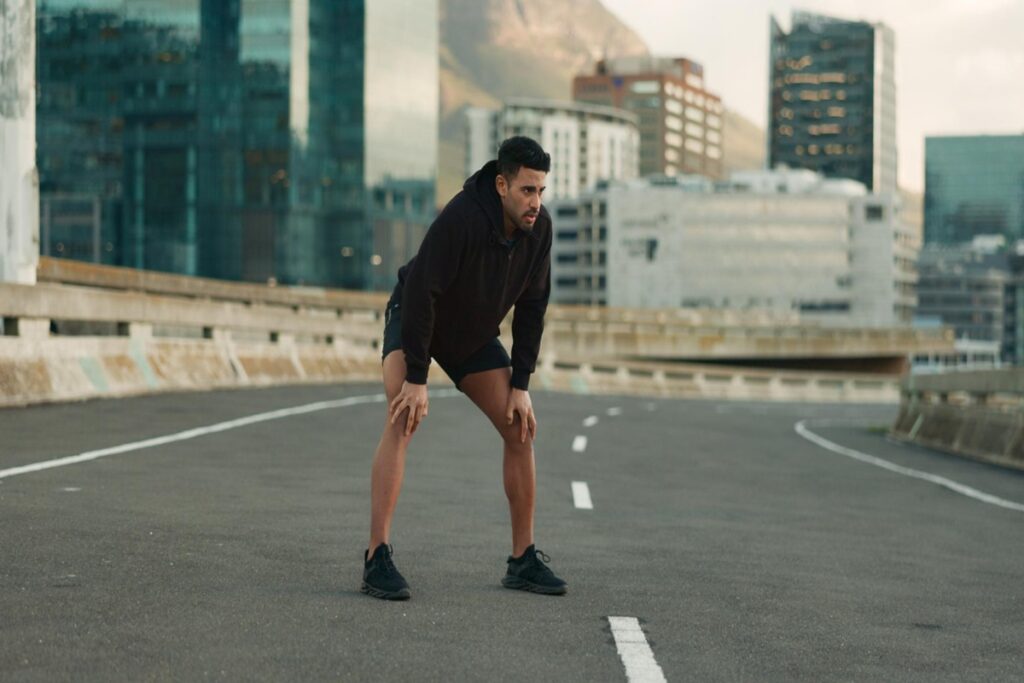
Knee pain when running is one of the most common complaints runners have, and here is the reassuring headline: it is usually a fixable problem with load, strength, and technique, not a sign your knees are falling apart. The ache can show up in different spots depending on what is irritated, but across almost all of them, the same rehab principles get you back on the road.
Where Runners Feel It
Knee pain when running can come from several places. It might be the patellar or quad tendon (tendinitis), the outside of the knee along the IT band, a meniscus irritation along the joint line, the inside of the knee from pes anserine bursitis, or the kneecap tracking poorly, known as patellofemoral pain or “runner’s knee.” Pinning down the exact tissue needs an exam, but the good news is that the early plan is similar across most of them. It often starts higher up the chain, too, since the hips and core have as much to do with knee pain when running as the knee itself.
First, the Good News: Running Isn’t Wrecking Your Knees
Many runners fear that every mile is grinding their joints away. The evidence says otherwise. A large meta-analysis found that recreational runners actually had a lower rate of knee and hip arthritis than sedentary people, about 3.5 percent versus 10.2 percent. So knee pain when running is almost never a reason to hang up your shoes for good. It is a signal to fix something, then keep going. Framing it that way, as feedback rather than damage, takes the fear out of it and makes the plan below far easier to stick with.
Step 1: Calm It Down
Start with a short break from running, or at least a big reduction, so the irritation can settle. This is relative rest, not total rest, and the aim is to stop provoking the tissue while you address the cause. If pain lingers, hands-on therapy to the calf, thigh, and kneecap can bring it down faster. Rest alone will not cure knee pain when running, but it opens a calmer window to do the real work.
Step 2: Restore Knee Extension and Mobility
A knee that cannot fully straighten loads poorly with every stride. If that is you, restore knee extension with drills like banded calf raises, quad sets, and terminal knee extensions. Stiffness above and below the knee matters too, so pairing this with hip mobility and ankle mobility work takes twisting stress off the joint. This mobility base is a quiet but powerful fix for knee pain when running.
Step 3: Strengthen the Hips, Glutes, and Hamstrings
Here is the most common driver we see. When the glutes and hamstrings are not strong enough to support your stride, the quads overwork and pull hard on the kneecap, and weak outer-hip and core muscles let your form break down. Waking those up with bridges, side-lying hip abduction, and side planks changes how the knee tracks. From there, real strength is the goal, because even runners need to lift. Squats, deadlifts, step-ups, and lunges build a knee that tolerates mileage, which is exactly what our how to strengthen your knees guide is built around. Strength training is the most reliable long-term answer to knee pain when running.
Step 4: Tune Your Footwear and Form
Finally, look at your shoes and your stride. The wrong footwear or a poor pattern can pile strain onto the knee. One of the simplest, best-supported tweaks is cadence: increasing your step rate by about 10 percent reduces force on the kneecap by taking shorter, quicker steps. A running analysis can dial in your form and footwear so you are not fighting your mechanics on every run. Small tweaks here, a slightly quicker cadence and shoes that suit your foot, often ease knee pain when running within a couple of weeks.
When to Get It Checked First
Most running knee pain is safe to work on, but see a provider promptly if your knee locks or gives way, swells significantly, or you cannot bear weight on it, or if the pain is sharp and worsening rather than a manageable ache. A quick assessment sorts out whether it is a simple load issue or something that needs imaging first.
Frequently Asked Questions
Is running bad for your knees?
For most people, no. Recreational running is associated with lower, not higher, rates of knee arthritis compared with being sedentary. Knee pain when running usually reflects a training or strength issue, not damage from running itself.
Do I have to stop running completely?
Rarely. Relative rest, cutting back and cross-training while you rebuild, usually beats stopping cold. The goal is to keep you moving while you fix the cause, then gradually rebuild your mileage.
What is “runner’s knee”?
It usually refers to patellofemoral pain, where the kneecap tracks poorly and aches at the front of the knee. It is one common cause of knee pain when running, and it responds well to the hip and quad strengthening above.
How long until I can run pain-free?
Many runners turn the corner within a few weeks of load management plus targeted strength and form work, with lasting change over one to three months. Consistency matters more than any single session, and it is what turns knee pain when running from a recurring frustration into a memory.
Get Back on the Road in Greenville, SC
Addressed with a thorough assessment and the right plan, running without knee pain is very achievable, while pushing through poor mechanics can turn a small niggle into a stubborn injury. If knee pain when running is holding you back, the physical therapists at Movement Solutions in Greenville, SC would be glad to help. Explore our knee pain resources to start.
We also offer a free 15-minute phone consultation to talk through your options. Call us at (864) 558-7346 and ask how we can help.
Medically reviewed by Dr. Tim Varghese, PT, DPT · Last updated August 28, 2026

Dr. Tim Varghese, PT, DPT
Dr. Tim Varghese, PT, DPT, is the founder of Movement Solutions Physical Therapy in Greenville, SC. He earned his Doctor of Physical Therapy from the Medical College of Georgia and is a Board-Certified Orthopedic Clinical…
More about Dr. Tim →