
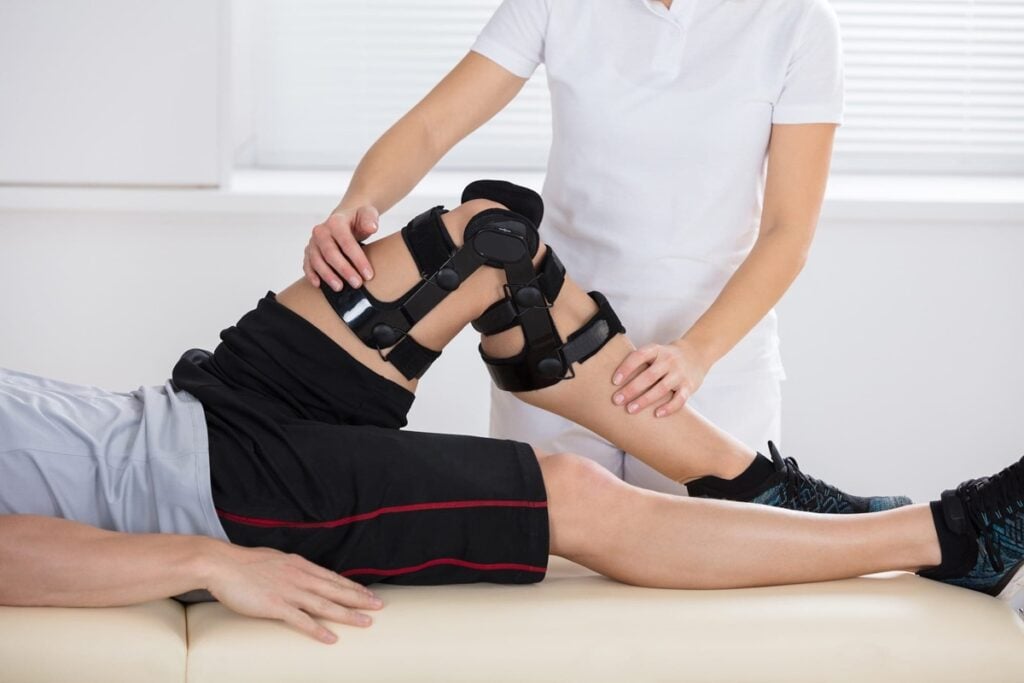
An ACL tear is one of the most common serious knee injuries, especially in athletes who cut, pivot, and jump. If you have had the ligament reconstructed, here is the part that matters most: your ACL surgery recovery, not the operation itself, is what decides whether you get back to full, confident activity. A well-built rehab plan is the difference between a strong return and a frustrating one, and it is exactly what we build for active adults at Movement Solutions.
Why Rehab Decides Your ACL Surgery Recovery
The surgeon repairs the ligament, but rehab rebuilds the knee. That is not just a slogan. A landmark study found that meeting objective return-to-sport criteria, especially symmetrical quadriceps strength, cut the reinjury rate by more than 80 percent, while returning to cutting sports too soon sharply raised the risk. In other words, the quality and patience of your ACL surgery recovery, not the calendar, is what protects the new ligament. It is also worth knowing that surgery is not always required in the first place: a five-year trial found that rehab first, with surgery only if needed, produced outcomes similar to early surgery, and more than half of patients avoided an operation.
A Quick Word on the Injury
The ACL connects your thigh bone to your shin bone and stabilizes the knee against twisting. It can tear when you plant and pivot, land awkwardly from a jump, or take a direct blow. People often feel a pop, have the knee swell within hours, and notice it giving way. Hands-on tests point toward the diagnosis, and an MRI ordered by an orthopedic surgeon confirms it and checks for other damage. Whatever the plan from there, a structured ACL surgery recovery gives the knee the best shot at returning to full function.
Key 1: Protect the Knee and Bear Weight
Early on, the priority is protecting the graft while gradually loading the leg. Crutches and, in some cases, a brace are used based on your surgeon’s protocol, and we make sure any brace fits and is used safely. From there, the first stretch of ACL surgery recovery is a careful progression toward full weight-bearing, calming swelling as you go. This phase is protective, not passive, and it sets up everything that follows.
Key 2: Restore Motion
In the first weeks, regaining the knee’s motion, especially full straightening, is a top priority. Gentle home exercises restore range while boosting blood flow to reduce swelling. If other structures were repaired at the same time, such as a meniscus, your surgeon may cap how far the knee should bend for a while, and we work within those limits. A knee that cannot fully straighten loads poorly, so this early motion work is a quiet but decisive part of ACL surgery recovery.
Key 3: Rebuild Strength
Strength is the engine of ACL surgery recovery. We combine weight-bearing and non-weight-bearing exercises focused on the hip and thigh, often within a protected range to guard the new ligament, then progressively increase the load over the weeks and months. Restoring quadriceps strength that matches your other leg is one of the single most important milestones, because it is directly tied to a safer return. This is the same “earn it, then load it” logic behind our knee-strengthening guide.
Key 4: Restore Balance and Control
A stable knee is not just a strong one, it is a well-coordinated one. As strength returns, we add balance and neuromuscular training, starting with gentle weight shifts onto the surgical leg and progressing to single-leg control during dynamic movement. This retrains the knee to react and stabilize automatically, which is a core part of ACL surgery recovery that pure strength work alone does not cover.
Key 5: Return to Sport Safely
The final phase is a criteria-based return to running, jumping, hopping, and sport-specific drills, and it varies widely from person to person. Rather than clearing you by a date on the calendar, we progress you when you hit objective strength, control, and confidence targets, because that is what the evidence links to a lower reinjury risk. Getting this last stage right is what turns a good ACL surgery recovery into a lasting one, so you return ready rather than merely healed. If your sport involves distance running, our knee pain when running guide pairs well here.
When to Get It Checked First
Most post-ACL recovery is smooth, but a few symptoms need prompt attention because this is a surgical context. Seek immediate care for calf pain, warmth, or swelling, or any shortness of breath, which can signal a blood clot. Contact your surgeon quickly for fever, spreading redness, or drainage from the incision, which can signal infection, and for a knee that locks or gives way. Clearing these first keeps your ACL surgery recovery on track.
Frequently Asked Questions
How long does ACL surgery recovery take?
It varies, but a return to pivoting sport typically takes nine to twelve months or more, not the few months many people expect. What matters most is meeting objective strength and control targets rather than rushing back on a fixed date, since early return raises the reinjury risk.
Can I avoid ACL surgery altogether?
Sometimes. Research shows that structured rehab, with surgery only if the knee stays unstable, works well for many people, and a large share never need an operation. Whether that fits you depends on your knee’s stability and your activity goals, which is worth discussing with your provider.
What is the most important part of ACL surgery recovery?
Rebuilding quadriceps strength to match your other leg and passing objective return-to-sport tests. Those milestones are tied directly to a lower chance of reinjury, which is why a patient, criteria-based ACL surgery recovery beats a rushed one every time.
Will my knee be as strong as before?
For most people who complete a full rehab program, yes, and often more resilient because of the strength and control work. The key is finishing the process rather than stopping once the knee simply feels fine.
Get Back to Activity in Greenville, SC
Addressed with a thorough, well-designed plan, a full recovery after ACL reconstruction is very achievable, while a rushed or poorly built program invites setbacks. If you have had, or are planning, ACL surgery, the physical therapists at Movement Solutions in Greenville, SC would be glad to guide your ACL surgery recovery. Explore our knee pain resources, or our post on knee arthroscopy recovery if you had a scope instead.
We also offer a free 15-minute phone consultation to talk through your options. Call us at (864) 558-7346 and ask how we can help.
Medically reviewed by Dr. Tim Varghese, PT, DPT · Last updated August 26, 2026

Dr. Tim Varghese, PT, DPT
Dr. Tim Varghese, PT, DPT, is the founder of Movement Solutions Physical Therapy in Greenville, SC. He earned his Doctor of Physical Therapy from the Medical College of Georgia and is a Board-Certified Orthopedic Clinical…
More about Dr. Tim →